Picking the wrong dog ramp means a wasted $60-$150 and a dog who still won't use it — this guide breaks down what actually matters for stairs, beds and cars so you buy once and get it right.
- Match ramp length to the exact height you're covering — a car boot ramp for stairs is too steep and a stair ramp in a car boot is too short.
- Weight capacity should clear your dog's adult weight by at least 20kg, not sit right at the limit.
- Non-slip surface texture matters more than material — carpeted and ridged-rubber ramps outperform smooth plastic on wet paws.
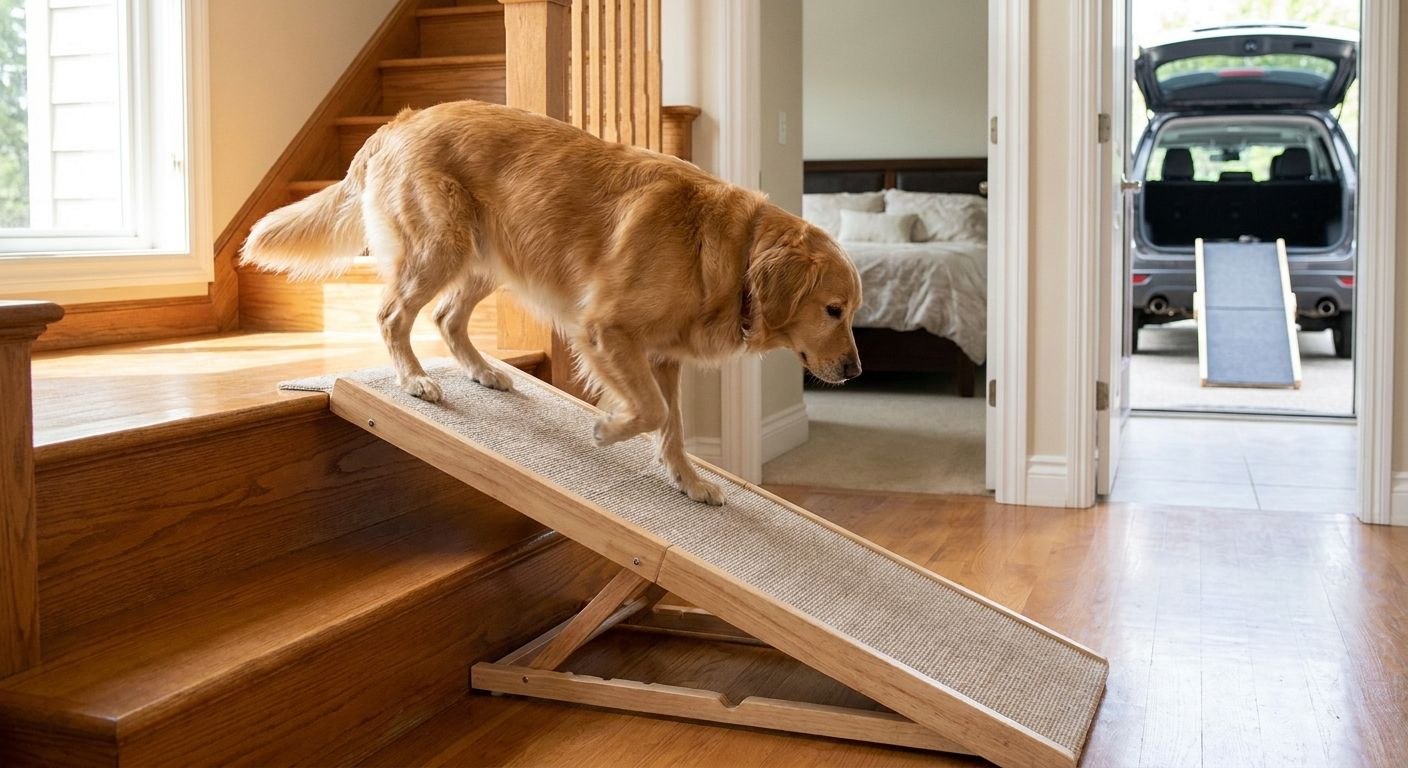
- A dog ramp for stairs works best at a shallow incline; anything steeper than roughly 25 degrees strains hips and knees.
- Verdict: buy a ramp sized to the specific job (stairs, bed or car), not a generic one-size ramp.
Why this matters
A dog ramp for stairs isn't a luxury item — it's joint protection. Older dogs, small breeds, dogs recovering from surgery, and anything with a long back (dachshunds, corgis) take real damage jumping on and off beds, couches and car boots repeatedly over 2026 and beyond.
The problem is most owners buy the first ramp that shows up in a search and it either sits unused in the garage or wobbles enough that the dog refuses to trust it. Browsing the wider range of pet supplies at Pet Care Online shows how much variation exists between ramp types built for completely different jobs — stairs, beds and cars are not interchangeable use cases, and treating them as one is the most common buying mistake.
What you'll need
- A tape measure (metric, at least 2 metres)
- Your dog's current adult weight, or an estimate if still growing
- 10-15 minutes to measure the exact height your dog needs to clear (bed, stairs, or car boot)
- A non-slip mat or yoga mat for the training phase
- Small treats for positive reinforcement during introduction
- 15-30 minutes over several sessions to train the dog to use the ramp confidently
The steps
1. Measure the exact height and angle first
This single measurement decides which ramp category you need, so don't skip it. Measure from the ground to the top surface of the bed, car boot lip, or top stair — not an estimate, the actual number in centimetres.
A general veterinary guideline is to keep the ramp incline under roughly 25 degrees for dogs with joint issues, arthritis, or short legs. That means a bed sitting 60cm off the ground needs a ramp roughly 1.3-1.5 metres long to stay under that angle — a short 90cm ramp forces a steeper, harder climb.
Common mistake: measuring the height of the furniture from the floor to the seat cushion instead of the actual top surface the dog needs to reach, which under-measures the ramp length required.
2. Size the ramp to your dog, not just the space
Small dogs and puppies need a narrower ramp with higher side rails to avoid slipping off the edge; larger dogs need width to plant all four paws confidently on a diagonal gait. A ramp under 30cm wide is workable for a small breed but genuinely risky for anything over 20kg.
Dogs recovering from cruciate ligament surgery or with hip dysplasia need the gentlest incline available, even if that means a longer ramp than the space technically requires. Vets commonly recommend ramps over stairs specifically for these dogs because stairs force repeated joint flexion a ramp avoids.
3. Check the weight capacity with margin
Don't buy a ramp rated exactly at your dog's weight — leave at least 15-20kg of headroom. Capacity ratings assume even, careful weight distribution; a dog bounding up a ramp puts more dynamic load through it than its static body weight suggests.
If you have two dogs of different sizes sharing one ramp, size to the heavier dog plus the margin, not an average.
4. Prioritise surface grip over material
Smooth plastic and bare wood look tidy but turn dangerous the moment a paw is even slightly wet or muddy. Ridged rubber, carpeted, or textured foam surfaces give traction in all weather, which matters most for car ramps used outdoors.
Common mistake: choosing a ramp based on how sleek it looks in photos rather than testing grip with a damp hand across the surface before committing.
5. Decide between fixed, folding and telescoping designs
Fixed ramps are the most stable and best for permanent bedside use where storage isn't a concern. Folding ramps trade a little rigidity for portability — useful if the ramp moves between the car and the house. Telescoping ramps adjust length for different car boot heights across trips (SUV one week, sedan the next) but tend to be lighter-duty and suit smaller dogs better.
For a dog ramp for stairs specifically, a fixed or semi-permanent design usually wins because stairs don't change height day to day the way car boots do.
6. Test indoors before trusting it outdoors or in the car
Set the ramp on a flat, carpeted surface first and walk your dog across it on lead with treats at the far end. Watch for wobble, flex in the middle, or sliding at the base — any of these mean the ramp isn't rated for the job or needs a non-slip mat underneath.
Only move to the actual stairs, bed, or car once the dog crosses the flat test confidently 3-4 times in a row.
7. Train gradually, don't force it
Most dogs need several short sessions, not one long one, to trust a ramp. Lure with treats, praise every step, and let the dog set the pace rather than pulling on the lead.
Expected outcome: most dogs cross confidently within 3-7 short sessions across a few days; a dog still refusing after two weeks of consistent short sessions likely needs a lower incline or wider ramp, not more training time.
Troubleshooting
- Dog freezes at the top and won't step on: the incline is likely too steep for their comfort — try a longer ramp or add a non-slip runner for visual and physical grip.
- Ramp wobbles or shifts under weight: check it's rated for your dog's actual weight with margin, and confirm rubber feet or grip pads are making full contact with the floor.
- Dog slips mid-climb: the surface lacks traction — add a carpet strip or textured mat rather than replacing the whole ramp.
- Ramp is too heavy to move between car and house: a folding or lighter-frame design solves this; fixed ramps aren't meant to travel.
- Ramp is too short for a taller car boot: telescoping designs adjust for this; a fixed-length ramp bought for one car often won't work for a second, taller vehicle.
- Dog uses the ramp going up but jumps off going down: this is common and usually resolves with a few sessions of luring downward with treats — going down feels less intuitive to most dogs than going up.
Tools and resources
- Tape measure for height and incline checks before buying
- Non-slip mat or carpet runner as a backup grip solution
- Treats for the training phase, ideally small and low-value so the dog stays motivated across repeat sessions
- The wider pet supplies range at Pet Care Online for comparing ramp styles, bedding, and travel gear in one place
What to do next
Once the ramp is measured, sized, and tested, the ongoing job is monitoring wear — check screws, hinges, and rubber feet every few months, especially on folding models that get more mechanical stress. A dog ramp for stairs bought correctly in 2026 should last years with basic care; one bought on guesswork usually gets replaced within a season.
FAQ
What's the best incline angle for a dog ramp for stairs?
Keep the incline under roughly 25 degrees for dogs with joint issues, arthritis, or short legs. A shallower angle means a longer ramp, which is the right trade-off for comfort over compact storage.
Is a dog ramp better than dog stairs?
Ramps are generally gentler on joints because they avoid the repeated flexion of climbing individual steps. Stairs can suit confident, mobile dogs in tighter spaces where a long ramp won't physically fit.
How much does a dog ramp cost in 2026?
Basic folding ramps sit at the lower end of the market while heavy-duty or telescoping car ramps cost more due to sturdier frames and adjustable mechanisms. Check current listings for exact pricing since it varies by size and brand.
Can small dogs and large dogs share the same ramp?
Only if the ramp is rated for the heavier dog's weight with margin and wide enough for confident footing. Sizing to the smaller dog and hoping the larger dog manages is a common and risky shortcut.
How long does it take to train a dog to use a ramp?
Most dogs cross confidently within 3-7 short sessions across a few days using treats and gradual encouragement. A dog still refusing after two weeks of consistent practice usually needs a lower incline or wider ramp rather than more training.
Do dog ramps work for car boots and beds equally well?
No — car boots and beds sit at different heights, so a ramp sized for one is often wrong for the other. Telescoping ramps adjust for varying car heights; fixed ramps suit a permanent bedside setup better.
What surface is safest for a dog ramp?
Ridged rubber, carpeted, or textured foam surfaces give the most reliable grip in wet or muddy conditions. Smooth plastic or bare wood looks tidy but becomes slippery fast, especially outdoors.
Why won't my dog use the new ramp?
Most refusals come down to an incline that's too steep or a surface that feels unstable underfoot. Testing on a flat, carpeted surface first and using treats to build confidence usually resolves it within a few short sessions.
One last thing
The detail owners skip most often is testing the ramp on a completely flat surface before ever putting it against the actual stairs, bed, or car — that one extra step catches a wobbly or under-rated ramp before it becomes a trust problem for the dog. Get that right and the rest of the buying decision is just measurements and margin.