Best overall: a sensor-controlled open-tray rake. Best for a cat that already likes a covered box: an enclosed rotating drum. Best for an open entry with a drum mechanism: an open-entry rotating drum. The best automatic cat litter box in 2026 is the one your cat will use comfortably and that you can inspect and clean without a struggle.
- Best overall automatic cat litter box type: a sensor-controlled open-tray rake, because you can see whether your cat is using it.
- Choose an enclosed rotating drum only if your cat already accepts covered litter boxes.
- Check the entry, safety stops, litter requirements and cleaning access before choosing any automatic design.
- Keep a familiar manual box available while your cat gets used to a new automatic box.
Why this matters
An automatic box removes waste from the litter area, but it does not make your cat's toilet routine hands-off. You still need to empty the waste compartment, replace litter, clean the mechanism and notice changes in what your cat leaves behind. A design that hides those signs or discourages your cat from entering creates more trouble than it saves.
This 2026 guide ranks design types, not named machines. The supplied product information does not establish the specifications or performance of any individual automatic litter box. Use the ranking to narrow the mechanism that suits your cat, then check the instructions and safety information for the exact model you are considering. Pet Care Online is a pet-supplies retailer for Australian owners; no automatic litter box from its catalogue is verified as a pick in this guide.
What makes the best automatic cat litter box?
The right choice starts with your cat's existing habits, not the cleaning cycle. Use these criteria before you compare designs:
- An entry your cat accepts. Match the opening and step-in height to how your cat uses its current box. A cat that avoids covered spaces needs an open option.
- A cycle that stops for a cat. Check how the exact machine detects a cat, delays cleaning and stops movement if a cat returns. Do not infer safety from the word automatic.
- Room to turn and dig. Compare the usable litter area and opening, not just the outside dimensions. Your cat needs space to use the box without brushing against the mechanism.
- Waste you can check. You need a practical way to notice changes in urine and stools. A sealed waste drawer is convenient only if you still inspect it.
- Parts you can clean. Look at how the tray, rake, drum or waste path comes apart. Waste trapped where you cannot reach it defeats the point of automation.
- Litter and power requirements you can meet. Check the manufacturer's specified litter type, placement and power setup before you buy. Do not assume the litter you already use will work.
Treat the safety instructions for a specific model as a pass-or-fail check. A preferred mechanism does not excuse unclear cat-detection behaviour or a cleaning cycle you cannot interrupt.
Automatic cat litter boxes at a glance
| Design type | Best for | Standout feature | Key limitation |
|---|---|---|---|
| Sensor-controlled open-tray rake | Owners who want visible litter habits | Open tray with a cat-triggered cleaning cycle | Rake and tracks still need hands-on cleaning |
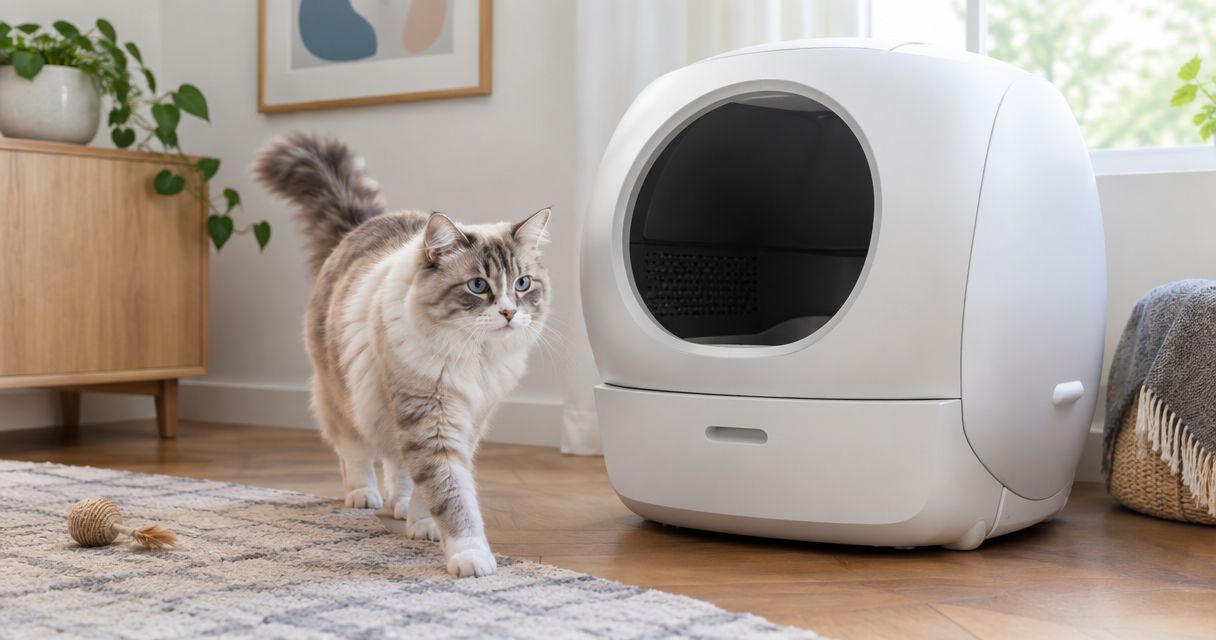
| Enclosed rotating drum | Cats already comfortable with covered boxes | Covered space separates the entry from the waste area | Hood can discourage cats that prefer an open box |
| Open-entry rotating drum | Owners who prefer a drum without a hood | Open access with rotating waste separation | Drum interior and entry still need inspection |
| Timed open-tray rake | Owners who want basic cleaning controls | Open tray with a scheduled cycle | A schedule alone does not tell you when the cat has left |
These are mechanism categories, not interchangeable product promises. Sensor arrangements, cleaning delays and access to parts differ between individual machines. In 2026, check the actual model manual against the criteria above rather than assuming that every box in a row behaves the same way.
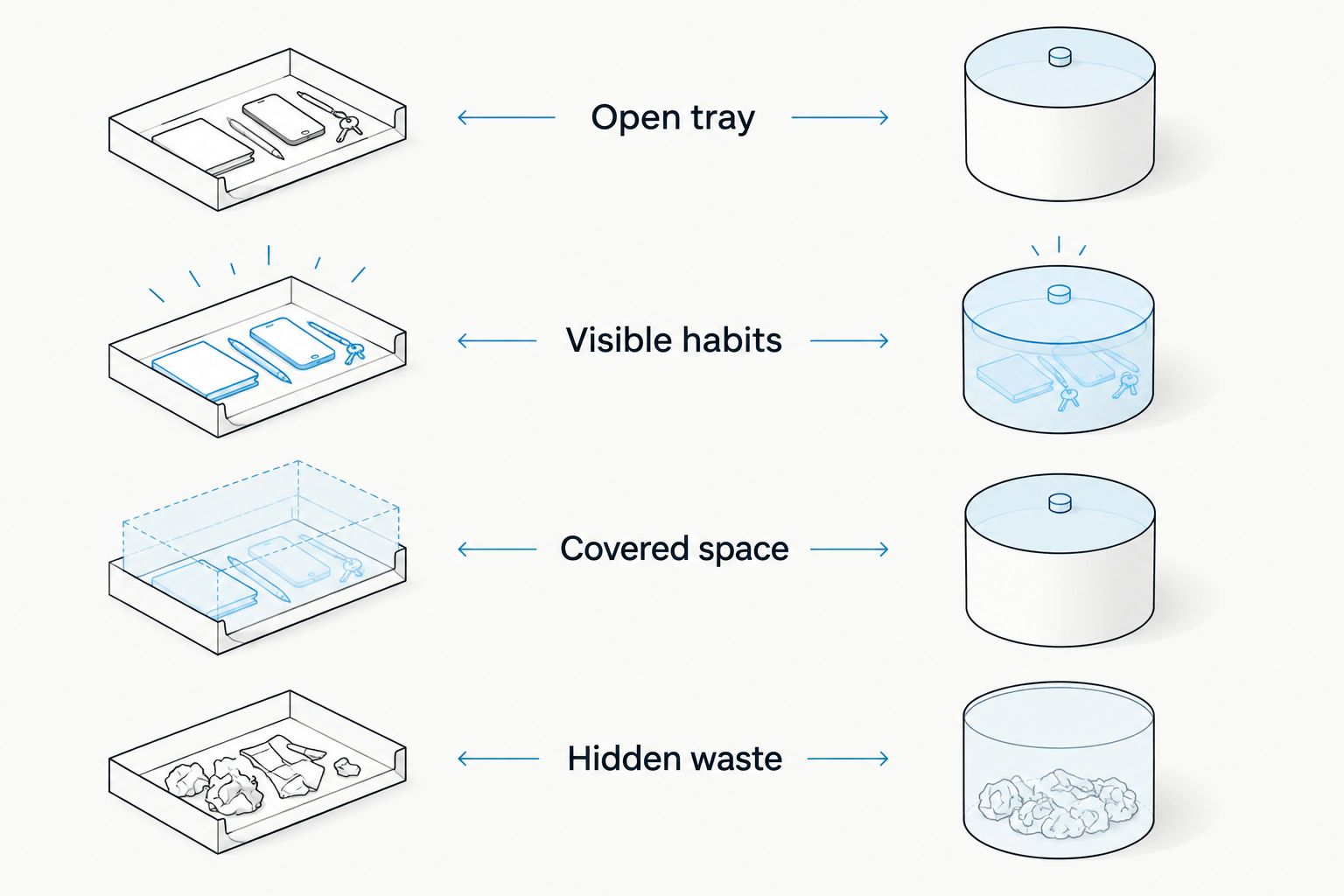
1. Sensor-controlled open-tray rake: best for daily visibility
A sensor-controlled open-tray rake keeps the litter area uncovered and moves a rake through it after the unit detects use and completes its delay. It is the best overall design type here because you can see whether your cat is entering the box and check the litter surface without opening a hood. That visibility makes the transition from a manual tray easier to watch.
Sensor-controlled open-tray rake pros:
- An open entry suits a cat already comfortable with an uncovered tray.
- You can see fresh digging, litter level and obvious mess without opening the machine.
- A cat-triggered cycle is tied to detected use rather than a clock alone.
Sensor-controlled open-tray rake cons:
- The rake, tracks and waste path can collect residue and need cleaning.
- An exposed tray does not hide the litter area from view.
- Safety depends on the individual model's detection and stop behaviour, not on the presence of a sensor alone.
Best for: A cat that uses an open box and an owner who wants to keep litter habits visible. Verdict: Buy only after checking the model's safety instructions, usable tray space and cleaning access.
2. Enclosed rotating drum: best for covered-box cats
An enclosed rotating drum turns to separate waste from litter, then directs waste into a compartment. Its covered entry makes the strongest case for a cat that already uses a hooded box without hesitation. It is not a shortcut to teaching an open-box cat to accept an enclosed toilet.
Enclosed rotating drum pros:
- The covered entry suits cats already comfortable using an enclosed box.
- Waste separates inside the drum rather than travelling across an open tray on a rake.
- The waste compartment keeps collected waste apart from the main litter area.
Enclosed rotating drum cons:
- You have to look inside to check the litter area and signs of use.
- A hesitant cat can reject the hood or opening regardless of the cleaning feature.
- You must check how the exact model stops rotation when a cat approaches or enters.
Best for: A cat that already chooses a covered litter box. Verdict: Buy if the entry, usable interior and verified safety behaviour fit that cat; otherwise, skip the hood.
3. Open-entry rotating drum: best for an uncovered drum setup
An open-entry rotating drum uses rotation to separate waste while leaving the entrance open. It gives you a drum mechanism without asking your cat to enter through a hood. The open entry is the reason to consider it; do not assume that it provides the same view into every part of the drum as a flat tray.
Open-entry rotating drum pros:
- An uncovered approach gives an open-box cat a more familiar way in.
- The rotating mechanism separates waste without a rake crossing a flat tray.
- You can see the entrance and check whether your cat approaches it.
Open-entry rotating drum cons:
- The curved interior still needs deliberate inspection and cleaning.
- Your cat must accept the drum's usable floor area, not just its open entrance.
- A model's movement, detection and stop rules still require a manual check.
Best for: An owner who wants drum-based cleaning for a cat that dislikes a hood. Verdict: Hold until you confirm the interior gives your cat enough space to turn and dig.
4. Timed open-tray rake: best for basic cleaning controls
A timed open-tray rake runs its cleaning mechanism on a schedule rather than relying on a cycle triggered by detected use. The open tray lets you keep an eye on your cat's habits. The trade-off is that a clock does not, by itself, confirm that the cat has left the box.
Timed open-tray rake pros:
- The tray stays open and easy to observe.
- Scheduled operation gives you a defined cleaning routine.
- Its operation is straightforward to understand: inspect the tray, confirm the schedule and empty the waste area.
Timed open-tray rake cons:
- A timed cycle alone is not a substitute for cat detection and a reliable stop function.
- The rake and tracks need regular cleaning.
- The schedule can run whether or not your cat has used the box.
Best for: An owner who wants a scheduled rake and can verify that the chosen model protects a cat during operation. Verdict: Wait if the manufacturer does not clearly explain how movement stops when a cat is present.
How to choose without disrupting your cat's routine
Keep your cat's current box in place while introducing an automatic one. Put the new box where your cat can approach it comfortably, add only the litter the machine's instructions allow, and let your cat investigate before you rely on a cleaning cycle. Do not take away the familiar toilet to force the switch.
Watch what your cat actually does, not just whether the machine runs. Does your cat enter, turn and dig? Does it leave comfortably? Check the litter area and waste compartment yourself. If your cat avoids the new box, keep the familiar one available and reassess the entrance, sound, movement and location.
For a home with 2 cats, the commonly used one-box-per-cat-plus-one guideline means planning 3 accessible litter spots. Count an automatic unit as a litter spot only when the cats use it. The rule is about access and choice, not a reason to assume one machine replaces several boxes.
How we ranked these designs
Cat acceptance comes first, safety second and cleaning convenience third. The open-tray sensor design leads because it pairs an accessible entry with a clear view of litter habits. An enclosed drum moves ahead only for a cat that already accepts covered boxes. The timed rake comes last because a schedule alone says nothing about whether a cat is in the tray.
This is a ranking of design trade-offs, not a performance test of named products. No model-specific cycle time, sensor coverage or capacity is established by the supplied information. For a 2026 purchase, compare those details in the instructions for each machine you shortlist, then choose the one that fits your cat's current toilet habits.
Which automatic cat litter box should you choose?
Choose a sensor-controlled open-tray rake as the default. It keeps your cat's litter habits easier to observe while giving you an automatic cleaning mechanism. If your cat already prefers a hooded box, compare enclosed rotating drums instead. If your cat likes an open entry but you prefer rotation to a rake, inspect an open-entry drum's usable interior before deciding.
Do not buy any automatic cat litter box solely because it removes waste from sight. In 2026, the deciding questions are whether your cat enters willingly, whether the machine stops safely and whether you will still check what it collects. Pet Care Online can be part of your broader cat-care shopping routine, but this guide does not present an unverified machine as a Pet Care Online recommendation.
FAQ
What's the best automatic cat litter box type in 2026?
A sensor-controlled open-tray rake is the best default design type in this guide. Its open tray makes it easier to watch your cat's litter habits, but the exact model still needs a safety and cleaning-access check.
Is a rotating litter box better than a rake?
A rotating box is better for a cat that accepts its entry and interior; a rake is better when you want a flat, open tray. Neither mechanism is a reason to overlook cat detection, usable space or cleaning access.
Will my cat use an enclosed automatic litter box?
An enclosed automatic box is most suitable for a cat that already uses a covered box comfortably. Keep a familiar manual box available while you see whether your cat accepts the new entry and cleaning cycle.
Can an automatic litter box replace every manual box?
No automatic box should replace your cat's familiar option before you know your cat uses the new one. In a multi-cat home, plan accessible litter spots around the cats' actual habits rather than the machine's waste capacity.
Are automatic cat litter boxes safe for kittens?
Check the exact model's stated restrictions before allowing a kitten to use it. Do not assume its sensors detect a small cat or that an automatic cycle is suitable just because the entrance is accessible.
What litter works in an automatic cat litter box?
Use only the litter types specified for the exact machine. Rakes and rotating drums separate waste differently, so your current litter is not automatically compatible.
Do you still need to clean an automatic litter box?
Yes, you still need to empty collected waste and clean the parts that contact litter and waste. Inspect the tray or drum regularly so a hidden compartment does not hide a change in your cat's habits.
One last thing
An automatic box can make waste removal less of a chore, but it should never make your cat's toilet habits invisible. Keep checking the litter area and what the machine collects. That simple habit matters more than choosing between a rake and a drum, and it belongs in your 2026 cat-care routine.