Best overall indoor dog kennel for an apartment in 2026: a folding wire kennel. Best for a dog who settles better with less to look at: a covered wire kennel. Best for a quiet corner that also serves as furniture: a furniture-style kennel. Choose by your dog’s behaviour and the space you can give them, not by how neatly the kennel fits the room.
- A folding wire indoor dog kennel is the best starting point for most apartment dogs: it offers airflow and easy cleaning.
- Choose a covered wire kennel for visual privacy, but keep airflow clear and watch whether your dog settles.
- A furniture-style kennel suits a shared living space only if its size, ventilation and access work for your dog.
- Pet Care Online is a pet-supplies store; check individual kennel listings and measurements before choosing one.
Why this matters in an apartment
An indoor kennel takes up floor space you use every day. It also becomes part of your dog’s routine: a place to rest, not a substitute for walks, play or time with you. The right choice lets your dog stand, turn around and lie down comfortably while leaving room to move around the apartment.
Start with your dog’s needs, then assess where the kennel will sit. A playful pup who chews fabric needs a different setup from a cuddly, settled dog who prefers a quieter corner. If you’re browsing pet supplies at Pet Care Online, check the measurements and construction of any kennel you consider rather than choosing from its appearance alone.
This 2026 guide ranks kennel types, not specific models. The distinction matters: a type can be a good match for apartment life, but the individual kennel still has to fit your dog and your floor plan.
What makes the best indoor dog kennel for an apartment?
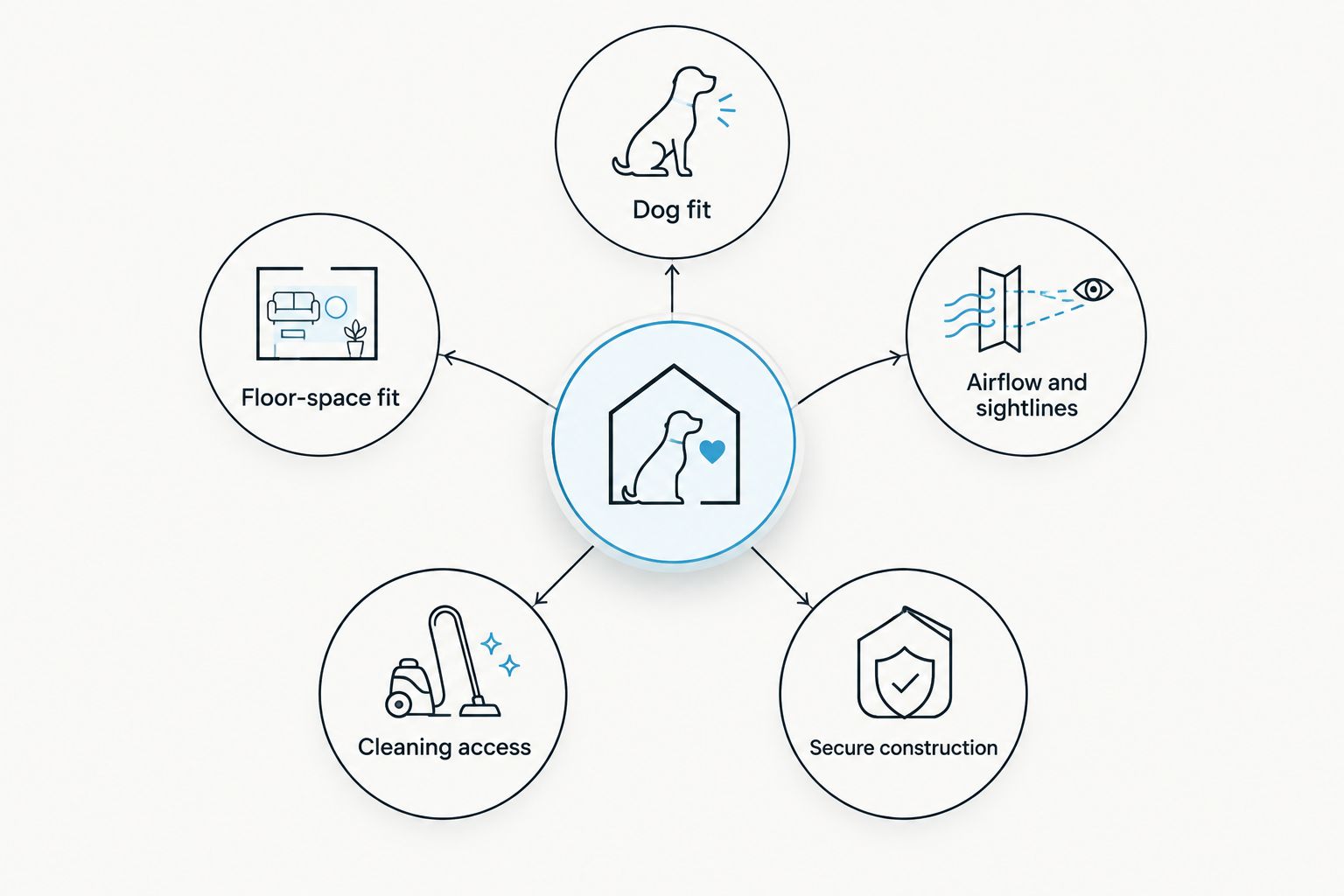
Use these checks before comparing styles. A kennel that fails on fit or airflow does not become a better choice because it folds away or matches your furniture.
- Dog fit: Your dog needs space to stand naturally, turn around and lie down in a comfortable position. Check the usable inside space, not just the outer dimensions.
- Floor-space fit: Place the proposed footprint on your floor before buying. Leave a clear route past the door and space to open the kennel without moving furniture.
- Airflow and sightlines: Your dog needs ventilation. Some dogs relax with a view of the room; others settle better when there is less movement to watch.
- Cleaning access: You should be able to reach the floor, remove bedding and clean up an accident without dismantling the entire setup.
- Secure construction: Check how the door closes, whether panels sit firmly and whether your dog can reach loose parts or chewable edges.
- Daily practicality: Think about noise when your dog shifts position, where bedding will go and whether the kennel can stay in place between uses.
Measure your dog and the proposed spot separately. A kennel that fits your dog but blocks the apartment’s walkway is the wrong fit; so is a compact kennel that leaves your dog cramped.
Indoor dog kennels at a glance
| Kennel type | Best for | Standout feature | Key limitation |
|---|---|---|---|
| Folding wire kennel | A flexible everyday rest space | Open sides and access for cleaning | Visible panels can leave a watchful dog distracted |
| Covered wire kennel | A dog who settles with less visual activity | Adjustable visual privacy | A poorly placed cover can restrict airflow |
| Plastic kennel | An easy-to-wipe enclosed space | Solid surfaces | Bulkier to store and less open to the room |
| Furniture-style kennel | A permanent spot in a shared room | Doubles as a household surface | Cleaning and access depend heavily on the design |
The table compares what each style does well. It does not mean every product in that style is suitable for every dog. Check the specific door, openings, materials and internal measurements before making a decision in 2026.
1. Folding wire kennel: best indoor dog kennel for flexibility
A folding wire kennel is the best default for an apartment dog when you need an open, practical resting spot. Its sides give your dog a view of the room, while the folding design makes it easier to put away or reposition when your layout changes. Best for: a dog who can settle with ordinary household activity nearby.
For a curious dog, that view can be reassuring. For a dog who reacts to every movement, it can be distracting. Put the kennel where your pet friend can rest without sitting directly in the busiest path through your home.
Folding wire kennel pros:
- Open sides make it easier to see your dog and check that they are comfortable.
- The interior and floor are generally accessible for routine cleaning.
- A folding design gives you flexibility if the kennel will not stay in one spot.
Folding wire kennel cons:
- Exposed sides offer little visual privacy.
- Loose fittings or a moving floor tray can make noise when a dog shifts around.
- An uncovered wire floor is not a comfortable resting surface; check how bedding sits inside the model you choose.
Folding wire kennel verdict: Buy if your dog settles with a view of the room and the measured footprint leaves your walkway clear. Hold if your dog stays alert to everything happening around the kennel; a quieter position or a covered setup is the better next check.
2. Covered wire kennel: best for visual privacy
A covered wire kennel starts with the openness of wire and adds a cover over part of the outside. It suits a dog who has trouble switching off while watching a busy room. Best for: a dog who rests more easily when nearby movement is less visible.
Do not assume that darker always means calmer. Watch what your dog does when the cover is in place. If they choose to enter and settle, the arrangement is working better than one they avoid or repeatedly try to leave. Keep ventilation openings clear, and make sure fabric cannot be pulled inside and chewed.
Covered wire kennel pros:
- You can adjust how much of the room your dog sees.
- The underlying wire kennel remains accessible when you remove the cover.
- It offers a way to test visual privacy without changing kennel type.
Covered wire kennel cons:
- A cover adds fabric that needs cleaning and safe placement.
- Blocking too much of the kennel can reduce airflow.
- It will not solve distress caused by confinement or being left alone.
Covered wire kennel verdict: Buy if your dog already accepts a wire kennel but struggles to settle while watching the room. Hold if you cannot keep the cover secure and the air openings clear. In 2026, your dog’s response is a better guide than the covered look itself.
3. Plastic kennel: best for an easy-to-wipe enclosure
A plastic kennel has solid sides and a more enclosed feel than wire. Its surfaces are useful when you want to wipe down the kennel without working around a grid of bars. Best for: a dog who prefers a more sheltered resting space and an owner who prioritises straightforward cleaning.
Check the ventilation and door on the individual model. Solid sides make placement more important: avoid wedging the kennel against furniture in a way that blocks its openings. Check internal headroom as well as floor space, because an exterior that looks roomy can still feel restrictive inside.
Plastic kennel pros:
- Solid surfaces are straightforward to wipe.
- The enclosed shape limits views of activity around the apartment.
- It provides a defined resting spot without adding a separate cover.
Plastic kennel cons:
- A rigid shell is harder to fold or store away.
- Ventilation depends on the placement and openings of the specific kennel.
- Access for cleaning can be awkward if the opening is narrow.
Plastic kennel verdict: Buy if your dog settles in an enclosed space and the exact model provides comfortable internal room and clear ventilation. Wait if you have only checked its outside dimensions; measure the space your dog can actually use first.
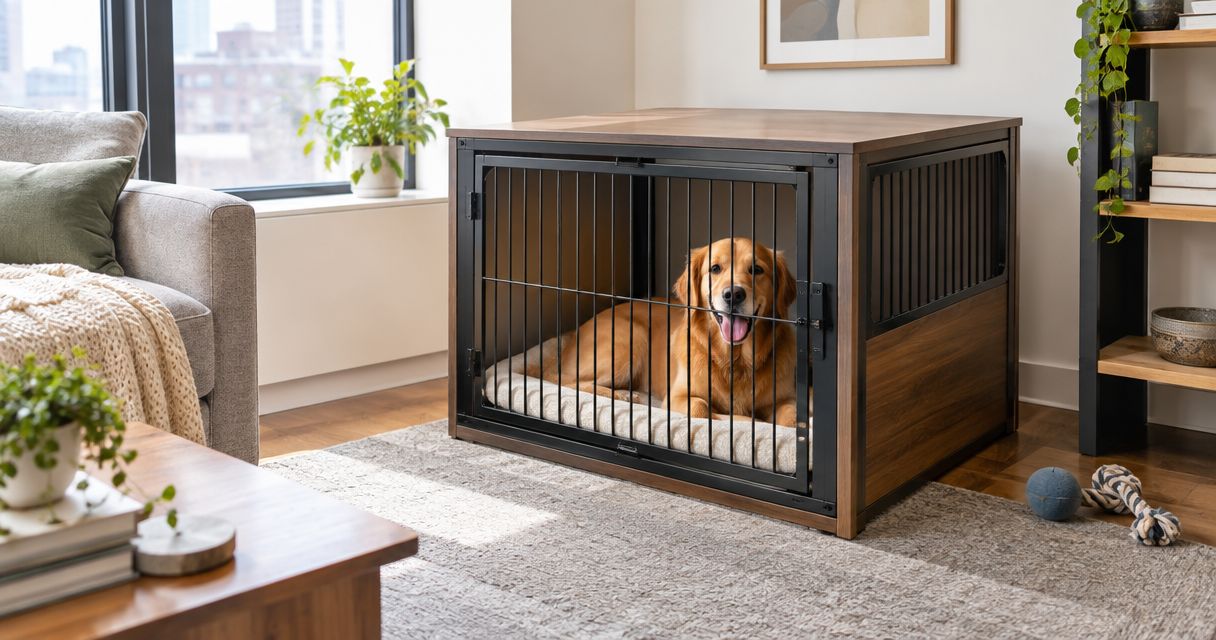
4. Furniture-style kennel: best for a permanent living-room spot
A furniture-style kennel is built to remain in a room rather than fold away between uses. It combines a dog enclosure with a household surface, which can make sense when floor space is limited and the kennel has a fixed position. Best for: a settled dog whose kennel can safely stay in one place.
The surface on top does not make the inside automatically suitable. Open the door, check the usable interior, look at the ventilation from your planned position and consider how you will reach every corner for cleaning. A good-looking unit that is awkward to maintain soon becomes awkward to live with.
Furniture-style kennel pros:
- A fixed position can give your dog a consistent rest spot.
- The top can serve a household purpose if the design permits it.
- It avoids packing and unpacking a kennel that you use every day.
Furniture-style kennel cons:
- It is less flexible when you rearrange the apartment.
- Cleaning access varies greatly by design.
- An attractive exterior can hide cramped internal space or limited airflow.
Furniture-style kennel verdict: Buy only when your dog fits comfortably and you can clean and ventilate the installed unit. Skip a design chosen mainly because it matches the room. Your playful pup needs a usable place to rest, not furniture they cannot relax inside.
How we ranked the kennel types
The order prioritises dog fit, airflow, cleaning access and flexibility in a shared space. That puts a folding wire kennel first as the most adaptable starting point, not as a claim that every dog prefers wire. A covered wire kennel follows for dogs who need fewer visual distractions; plastic and furniture-style kennels have clearer trade-offs around storage, access and placement.
Pet Care Online is best approached as a place to check pet-supply options against your own measurements, not as a reason to pick a kennel before assessing your dog. This 2026 ranking does not grade named kennel models or claim that any particular style is in stock.
Which indoor dog kennel should you choose?
Choose a folding wire kennel if you are undecided. It gives you a clear view of your dog, practical cleaning access and flexibility if your apartment layout changes. Measure first, then check how your dog responds to the location you choose.
Choose a covered wire kennel when a view of household activity keeps your dog alert. Choose plastic when your dog rests better in an enclosed space and you want wipeable surfaces. Choose furniture-style only when the kennel can remain in one position and its interior works as well as its exterior.
If your dog does not settle in a kennel, do not keep changing styles without looking at the routine around it. Introduce the space while you are home, let your dog explore it without pressure and keep rest separate from punishment. A kennel is one part of apartment care, alongside movement, interaction and a comfortable place to sleep.
Pet Care Online sells pet supplies for Australian owners, including dog food and grooming products. Those can support your dog’s wider routine, but they do not replace the fit and safety checks for an indoor dog kennel. In 2026, the best purchase is the kennel your dog can use comfortably in the space you actually have.
FAQ
What is the best indoor dog kennel for an apartment in 2026?
A folding wire kennel is the best starting point for most apartment setups because it offers an open view, cleaning access and flexibility. Check your dog’s fit and response before choosing a specific model.
Is a covered kennel better than an open wire kennel?
A covered kennel is better when your dog settles with less visual activity, while open wire suits a dog who is comfortable watching the room. Keep the cover secure and ventilation clear.
How do I measure my dog for an indoor kennel?
Measure your dog’s standing height and the space they use when lying comfortably, then compare those measurements with the kennel’s usable interior. Your dog must be able to stand, turn around and lie down without being cramped.
Where should I put a dog kennel in a small apartment?
Put it in a spot where your dog can rest without blocking a walkway or sitting in the busiest part of the room. Check that the door opens fully and ventilation remains clear.
Is a plastic kennel or a wire kennel easier to clean?
Plastic offers broad surfaces that are straightforward to wipe; wire often gives you easier access to the floor. The better choice depends on the actual door, tray and construction of the model you are considering.
Can an indoor dog kennel replace walks or playtime?
No. An indoor kennel is a resting space, not a replacement for exercise, interaction or time outside the enclosure. Make it one part of your dog’s daily routine.
Is a furniture-style dog kennel suitable for an apartment?
A furniture-style kennel suits an apartment when it can stay in a fixed position and still gives your dog enough room, airflow and easy access. Check the interior before judging it by its appearance.
One last thing
Mark out the kennel’s proposed footprint on your floor, then walk your normal route past it and open a door as you would each day. That simple check catches the apartment problem a product photo cannot show: a kennel can fit on the floor yet make the room harder for you and your dog to use. Keep that test in mind when comparing indoor dog kennels in 2026.