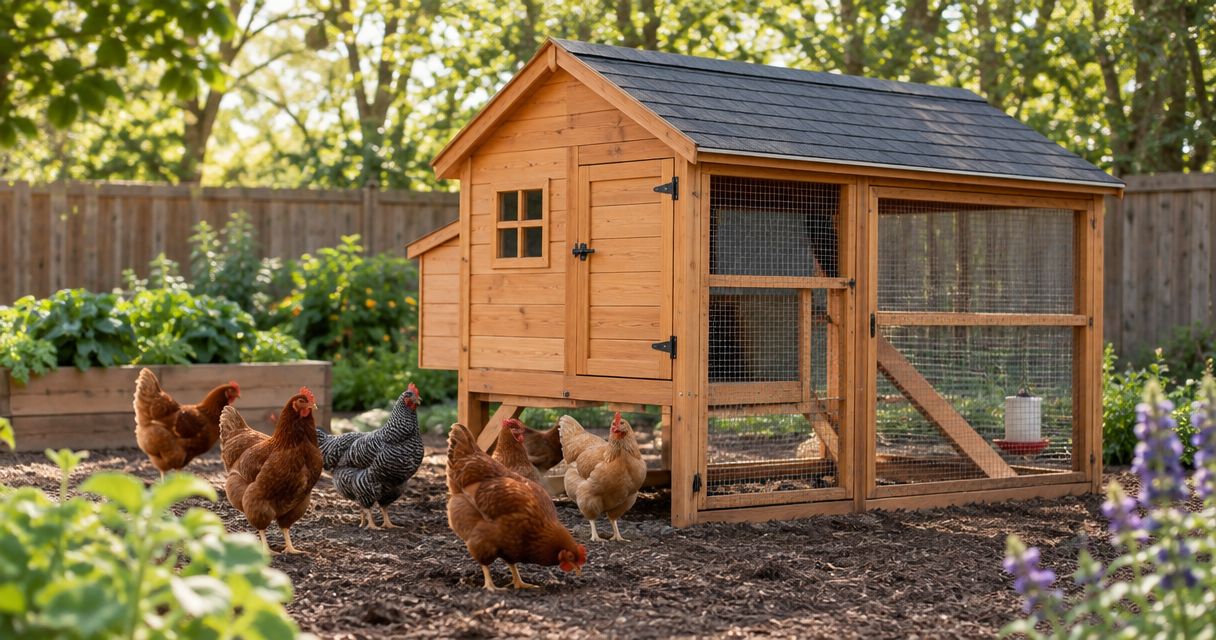
Best overall: a walk-in timber coop with an attached run wins for most small backyard flocks in 2026 because it balances space, predator-proofing and ease of cleaning. Best for tight backyards: an elevated hutch-style coop, which keeps the footprint small while still giving hens shelter and a covered run underneath. Best budget option: a repurposed shed or cubby-house conversion, provided you retrofit it properly for ventilation and predator-proofing.
If you're searching "chicken coops for sale" and comparing styles rather than specific listings, this guide breaks down which coop type actually suits a small Australian backyard flock, what to check before you buy, and where each style falls short.
- Walk-in timber coops with an attached run suit most small backyard flocks of 4-6 hens in 2026.
- Elevated hutch-style coops are the pick for tight courtyards and small blocks.
- Mobile A-frame coops (chicken tractors) protect grass and rotate flocks onto fresh ground.
- Repurposed shed conversions are the budget route, but only with proper predator-proofing added.
- Aim for roughly 0.4 sqm of coop floor and 2-3 sqm of run space per hen.
Why this matters
A coop that's too small turns into a stress and pecking-order problem within weeks, and a coop that isn't predator-proof gets tested by foxes, snakes and birds of prey sooner or later. Getting the coop style right in 2026 saves you a second purchase in 2027 once the flock settles in and you realise the first one doesn't fit your yard, your climate or your council's rules.
Most Australian councils cap the number of hens you can keep without a permit, and nearly all ban roosters in residential zones — check your local rules before you settle on a coop size. The right coop also has to handle Australian summer heat with real airflow, not just a couple of small vents, and that's where a lot of budget coops fall down.
Browse the full range of pet supplies at Pet Care Online if you're also stocking up on feeders, bedding or cleaning gear while you shop coop styles.
What makes the best chicken coop for a small flock
- Predator-proofing — welded mesh (not chicken wire), lockable doors, and a solid floor or buried skirt to stop digging predators.
- Ventilation without draughts — high vents that let hot air out in summer without creating a wind tunnel over the roosting bar in winter.
- Cleaning access — a full-height door or removable panels; anything you have to crawl into gets cleaned less often.
- Weatherproof roofing — a roof that sheds Australian summer heat and heavy rain, ideally with an overhang shading the run.
- Scalability — enough room to add two or three more hens later without a rebuild.
- Mobility (optional) — wheels or skids if you want to rotate the coop across the lawn and rest the grass.
At a glance
| Coop style | Best for | Standout feature | Key limitation |
|---|---|---|---|
| Walk-in timber coop with run | Most small flocks (4-6 hens) | Stand-up access for cleaning | Larger footprint than hutch styles |
| Elevated hutch-style coop | Tight courtyards, small blocks | Small footprint, covered run underneath | Cramped for flocks over 3-4 hens |
| Mobile A-frame (chicken tractor) | Rotating flocks onto fresh grass | Moves to protect lawn and soil | Less shelter in extreme weather |
| Repurposed shed conversion | Budget-conscious owners with a spare shed | Uses a structure you already own | Needs retrofitting for predators and airflow |
| Modular flat-pack coop | Renters and temporary setups | Disassembles and relocates easily | Lower-grade materials on most models |
1. Walk-in timber coop with run: best chicken coop for most small backyard flocks
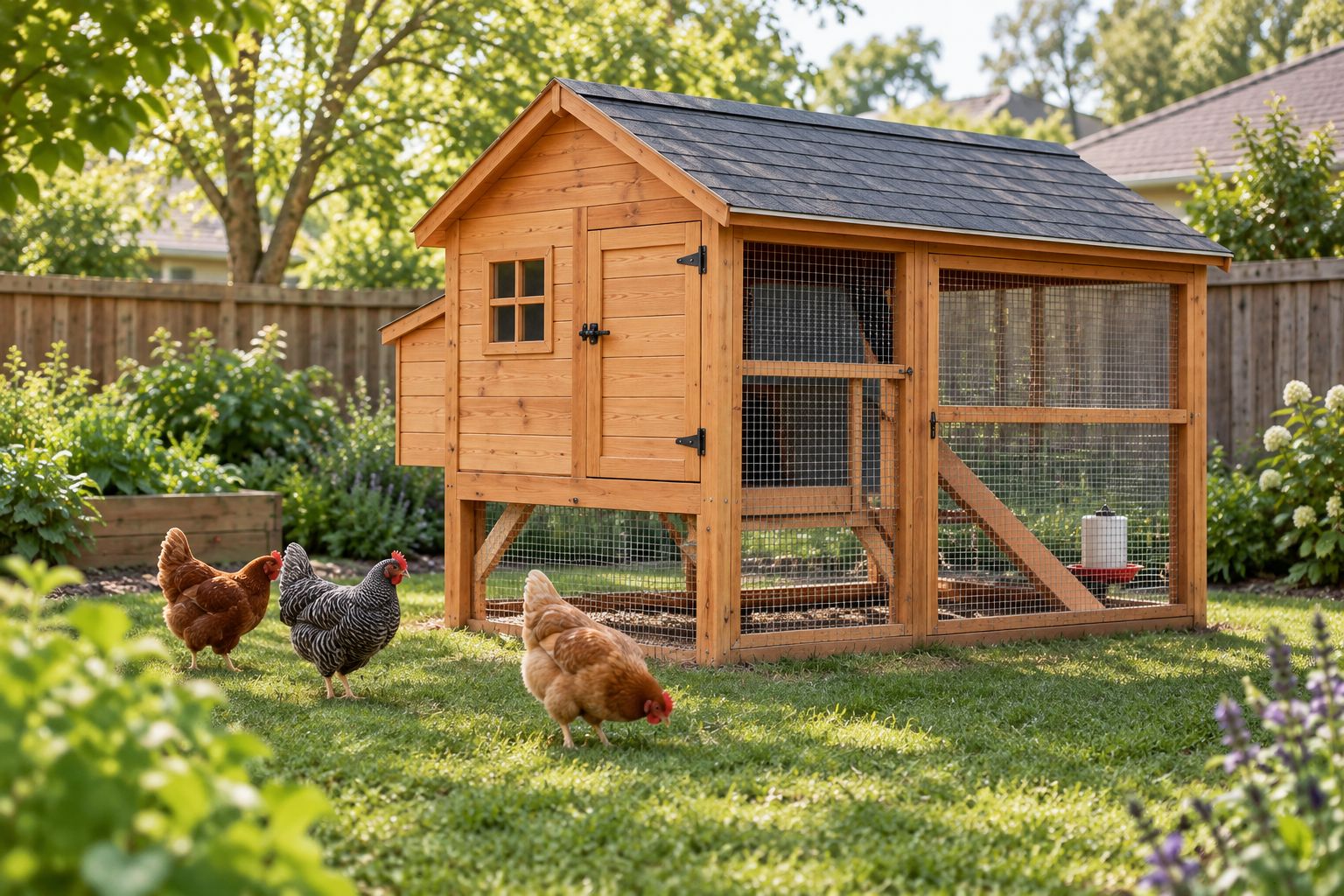
A walk-in coop gives you a roosting area, nesting boxes and an attached run inside one structure tall enough to stand in. That single feature — standing up while you clean — is the difference between a coop that gets scrubbed out weekly and one that gets neglected.
Walk-in timber coop pros:
- Full-height access makes cleaning and egg collection fast
- Enough floor space to scale from 4 hens to 6 without crowding
- Attached run means no separate fencing project
Walk-in timber coop cons:
- Takes up more backyard real estate than a hutch
- Heavier to move once assembled
Best for: small flocks of 4-6 hens with a backyard section to spare. Verdict: Buy if you have at least 3-4 square metres to dedicate to it.
2. Elevated hutch-style coop: best chicken coop for tight courtyards
This style lifts the sleeping and laying area on legs, with a wire run underneath. It's the go-to when the backyard is a courtyard, a narrow side yard, or a small suburban block where every square metre counts.
Elevated hutch-style coop pros:
- Smallest footprint of the styles here
- The gap underneath keeps hens off damp ground
- Easier to fit against a fence line or narrow strip
Elevated hutch-style coop cons:
- Gets cramped fast past 3-4 hens
- Nesting boxes and roosts sit close together, which can increase pecking-order tension
Best for: 2-4 hens in a small courtyard or narrow yard. Verdict: Buy for space-constrained blocks, Skip if you're planning to grow the flock past four birds.
3. Mobile A-frame coop (chicken tractor): best chicken coop for rotating small flocks
An A-frame coop on wheels or skids gets dragged across the lawn every few days, so the flock always has fresh grass and the yard doesn't turn into bare dirt under one fixed run.
Mobile A-frame coop pros:
- Spreads manure across the lawn instead of concentrating it
- Lighter framing keeps the whole unit easier to shift
- Reduces parasite build-up compared with a fixed run
Mobile A-frame coop cons:
- Sloped sides cut usable floor space compared with a walk-in
- Less shelter in heavy wind or extreme heat without added shade
Best for: owners with lawn space who want to rotate 3-5 hens across the yard. Verdict: Buy if lawn health matters to you, Hold if your yard is mostly paved or fully shaded.
4. Repurposed shed conversion: best chicken coop for budget-conscious owners
If you've already got a garden shed or cubby house doing nothing, converting it is the cheapest route to a coop — but only once you've added proper roosting bars, nesting boxes, welded mesh vents and a predator-proof door.
Repurposed shed conversion pros:
- No new structure to buy, just retrofit parts
- Often more spacious than a purpose-built small coop
- Solid walls handle Australian weather extremes well
Repurposed shed conversion cons:
- Ventilation is usually inadequate until you cut and screen new vents
- Original doors and latches rarely stop determined predators
Best for: owners with a spare shed and some DIY time. Verdict: Hold until the retrofit is done properly — don't move hens in before predator-proofing is finished.
5. Modular flat-pack coop: best chicken coop for renters and temporary setups
Flat-pack coops bolt or clip together without permanent fixings, which suits renters or anyone who might relocate the flock within a year or two.
Modular flat-pack coop pros:
- Disassembles for a house move or storage
- Usually the lightest option to shift around the yard
Modular flat-pack coop cons:
- Panel materials are typically thinner than built timber coops
- Joints and clips need regular checking as they loosen with weather exposure
Best for: renters or short-term flock keepers. Verdict: Buy for flexibility, Skip if you want a coop that lasts a decade without maintenance.
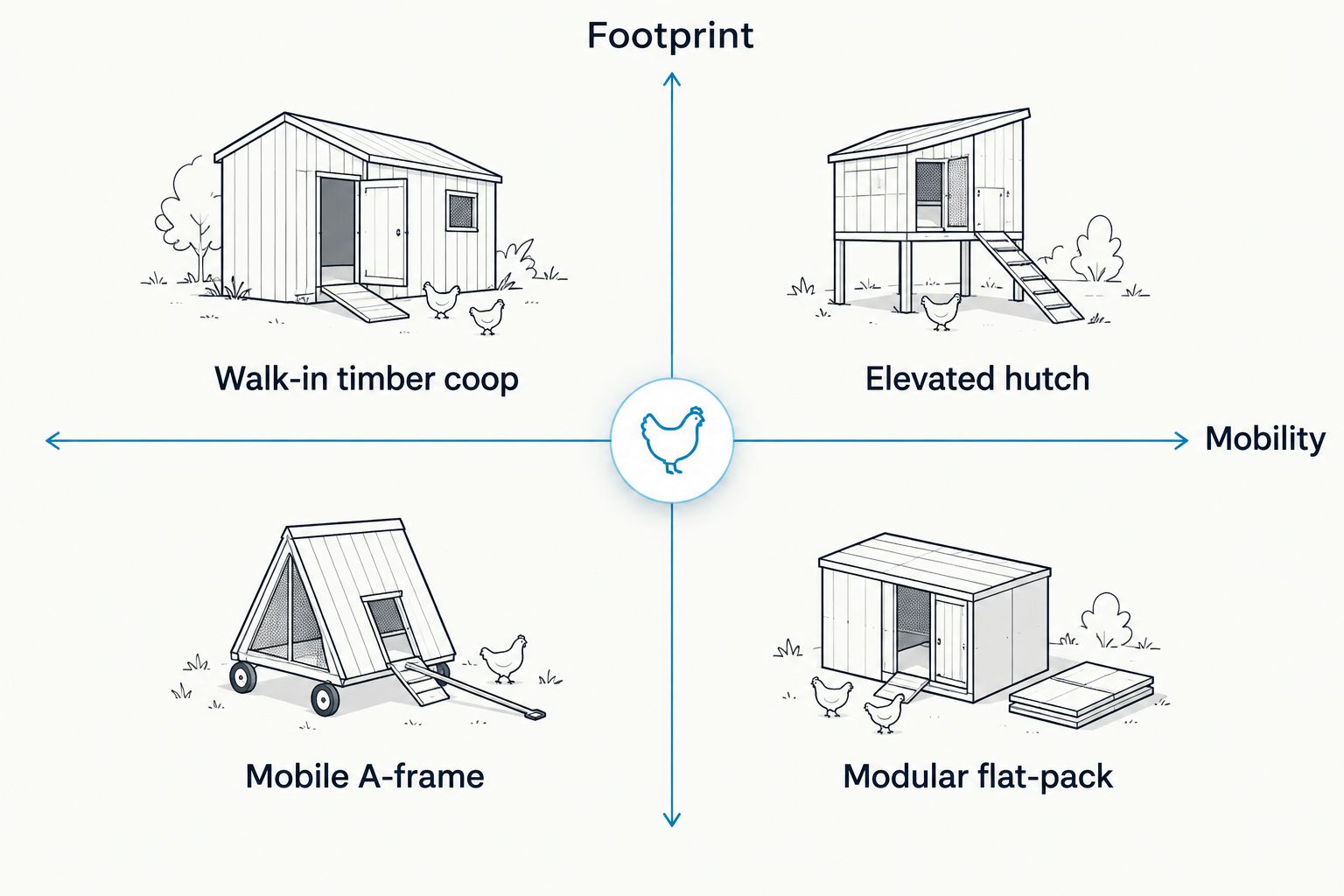
How we ranked these coop styles
Each style was weighed against the six criteria above: predator-proofing, ventilation, cleaning access, weatherproofing, scalability and mobility. The walk-in timber coop scored highest across the most criteria for a typical small flock, which is why it takes the overall spot — the other four styles each win on a specific trade-off (space, budget, mobility or flexibility) rather than beating it outright.
Which chicken coop should you choose?
For most small backyard flocks in 2026, the walk-in timber coop with an attached run is the safest default — it gives you room to grow the flock and makes weekly cleaning a five-minute job instead of a crawling exercise. Go elevated hutch-style if your yard is genuinely tight, mobile A-frame if protecting your lawn matters more than shelter from extreme weather, and only take on a shed conversion or flat-pack if you're comfortable finishing the predator-proofing yourself.
Whatever style you land on, don't buy hens before the coop passes a predator check: welded mesh over every gap wider than a few centimetres, a lockable door, and no soft ground a fox or python could exploit.
FAQ
What's the best chicken coop for a small backyard flock in 2026?
A walk-in timber coop with an attached run is the best overall pick for most small flocks of 4-6 hens because it's easy to clean and scales well. Elevated hutch-style coops suit tighter courtyards better.
Is a mobile chicken tractor better than a fixed coop?
A mobile A-frame coop is better if protecting your lawn and rotating hens onto fresh ground matters to you. A fixed walk-in coop offers more shelter and floor space for flocks that don't need to move.
How much space does a chicken coop need per hen?
Aim for roughly 0.4 sqm of coop floor space per hen plus 2-3 sqm of run space per hen. Undersized coops lead to pecking-order stress and dirty bedding faster.
Can I convert a garden shed into a chicken coop?
Yes, but only after adding welded mesh vents, roosting bars, nesting boxes and a predator-proof door. An unmodified shed rarely has enough ventilation or security for hens.
Do I need council approval for a backyard chicken coop in Australia?
Most Australian councils allow a small number of hens without a permit but ban roosters in residential areas. Check your specific council's rules before buying a coop sized for more hens than you're allowed.
How do I predator-proof a chicken coop?
Use welded wire mesh instead of chicken wire, bury a mesh skirt around the base to stop digging predators, and fit lockable latches on every door. Foxes and snakes test weak points at night, so gaps under 5cm still need covering.
What's the cheapest way to build a chicken coop for a small flock?
Converting an existing shed or cubby house is usually the cheapest route, since you're only adding roosting bars, nesting boxes, ventilation and predator-proofing rather than a whole structure.
How many hens fit in a small backyard coop?
A typical small backyard flock is 4-6 hens, which fits comfortably in a walk-in coop with roughly 2-2.5 sqm of floor space. Elevated hutch coops suit 2-4 hens before crowding becomes an issue.
One last thing
The detail most first-time flock owners skip is shade over the run, not the coop itself — a fully enclosed coop with no shaded outdoor space leaves hens with nowhere cool to sit through an Australian summer afternoon, and heat stress drops egg production faster than almost anything else on this list.
Related guides
- How to choose a dog ramp for stairs, beds and cars — useful if you're also setting up mobility gear for an older dog sharing the same backyard as your new flock.