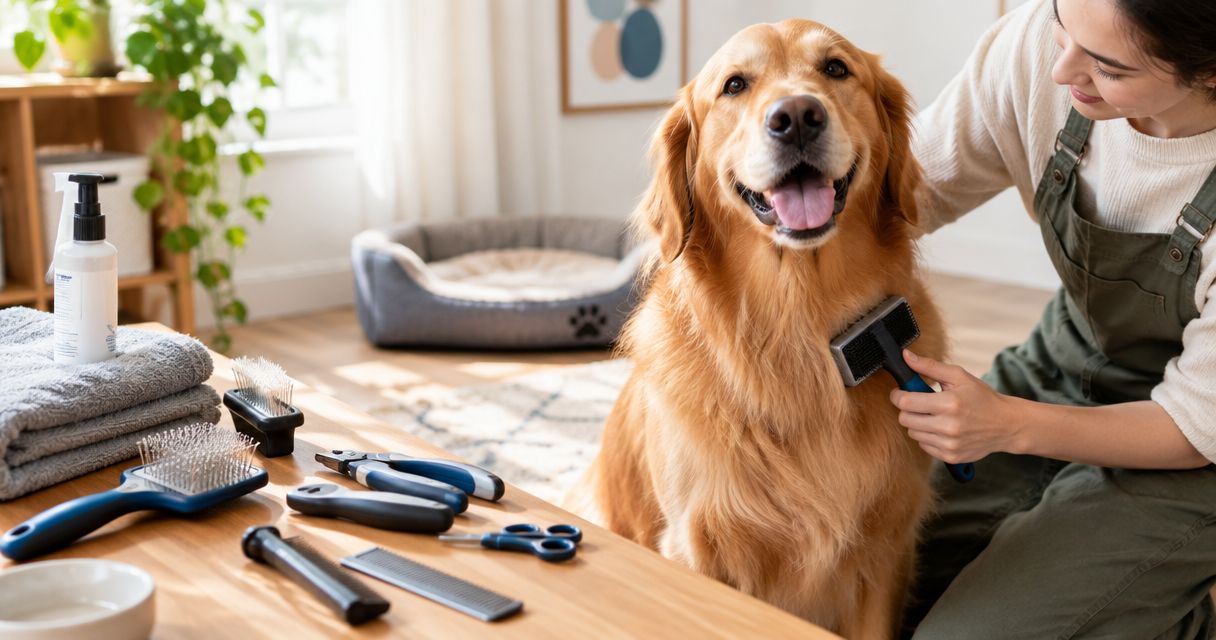
Best overall for medium-to-long coats: a slicker brush. Best for short coats: a rubber curry brush. Best for nail care: dog nail clippers. These are the dog grooming supplies to build around in 2026; the right kit depends on your dog's coat, comfort and handling needs.
- A slicker brush is the best starting point for home grooming a dog with a medium-to-long coat in 2026.
- Choose a rubber curry brush instead for a short, smooth coat; it does not do the same job as a slicker brush.
- Add nail clippers, dog shampoo, a dog toothbrush and toothpaste, and ear cleaner according to your dog's needs.
- Pet Care Online suits Australian owners shopping for dog grooming supplies alongside other pet essentials.
Why this matters
The wrong brush can make grooming uncomfortable without removing the loose hair or tangles you bought it to tackle. Buying every tool at once creates a different problem: a crowded kit you rarely use. In 2026, start with the coat tool that fits your dog, then add supplies for nails, bathing, teeth and ears as each task becomes part of your routine.
Pet Care Online is an Australian pet-supplies retailer that sells grooming and cleaning products. Use coat type and the task at hand to decide what belongs in your kit, rather than assuming every dog needs the same tools.
Home grooming also gives you regular opportunities to notice changes. While you brush, look for knots, irritated skin or places your dog does not want you to touch. Stop and ask a vet about painful, inflamed or unusual areas instead of trying to groom through them.
What makes the best dog grooming supplies?
- The right contact with the coat. Flexible rubber suits a short, smooth coat; a slicker brush reaches into longer hair. Neither tool is the default for every dog.
- Control near sensitive areas. You need to see what a nail clipper is cutting and keep a brush away from eyes, ears and sore skin.
- A comfortable grip. If you cannot control a tool when your dog shifts position, it does not belong in a home grooming session.
- A dog-specific formula. Choose shampoo and toothpaste intended for dogs rather than substituting products from your bathroom cabinet.
- Simple cleaning. Remove trapped hair from brushes and clean reusable tools according to their instructions before putting them away.
- A task you can repeat. A useful kit supports calm, manageable sessions, not one exhausting attempt to do everything at once.
Use these criteria to judge any dog grooming supplies you consider in 2026. A tool that looks convenient but does not suit your dog's coat or tolerance is the wrong pick.
Dog grooming supplies at a glance
| Supply | Best for | Standout feature | Key limitation |
|---|---|---|---|
| Slicker brush | Medium-to-long coats | Closely spaced pins work through loose hair and small tangles | Pressure can irritate skin |
| Rubber curry brush | Short, smooth coats | Flexible surface lifts loose hair during brushing | Cannot work through long-coat tangles |
| Wide-tooth comb | Checking longer coats for remaining knots | Teeth reveal snags a brush can pass over | Pulling through a knot hurts |
| Dog nail clippers | Controlled nail trims | Direct view of each cut | The quick can be hard to see |
| Dog shampoo | Bathing without human shampoo | Formulated for canine use | Washing does not remove established mats |
| Dog toothbrush and toothpaste | Direct cleaning of teeth | Reaches tooth surfaces as part of a routine | Takes patient training |
| Dog ear cleaner | Cleaning visible ear debris | Intended for the ear-cleaning task | Cannot treat an ear problem |
1. Slicker brush: best for medium-to-long coats
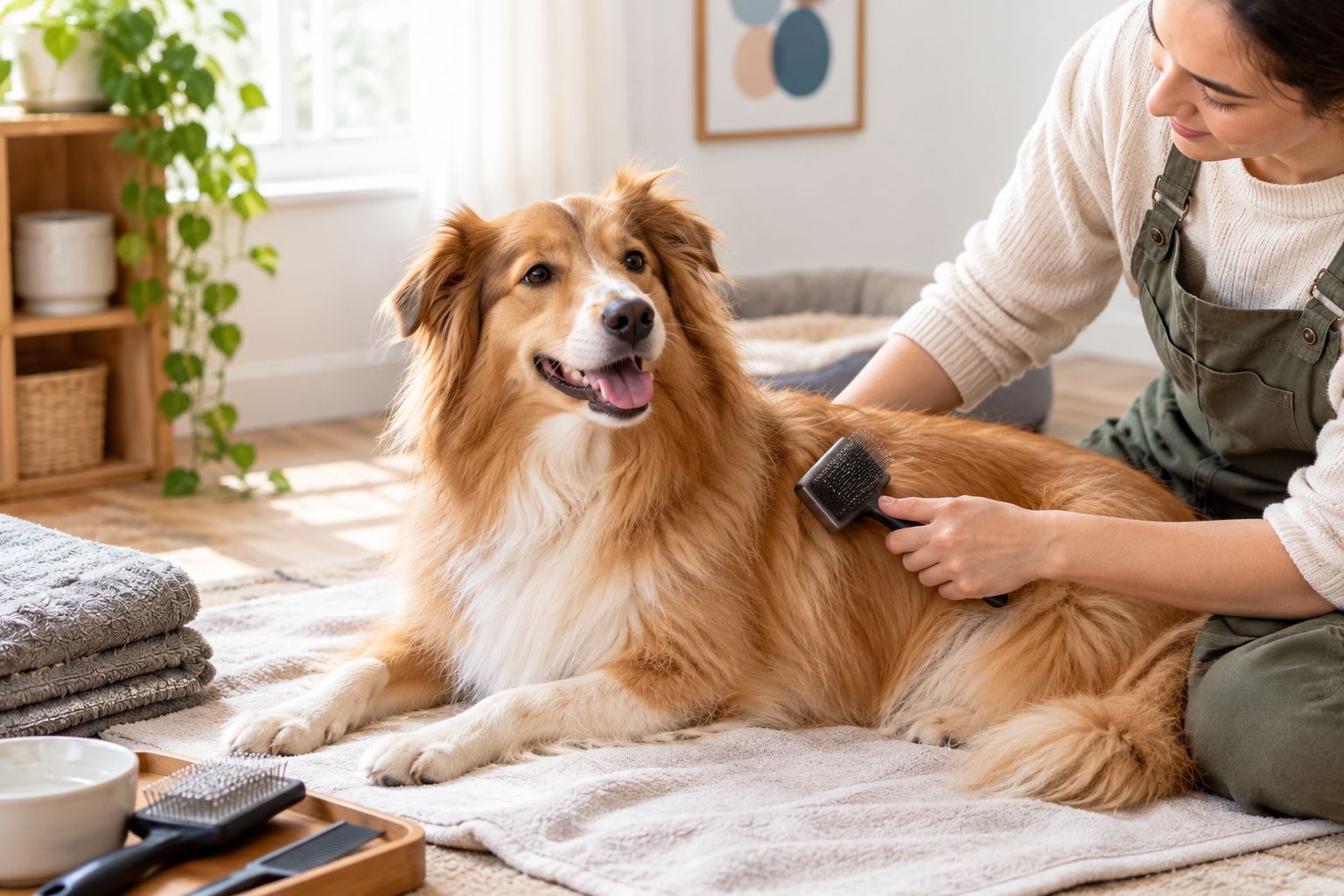
A slicker brush has closely spaced pins that work through loose hair and small tangles. It earns the top spot because brushing is the starting point for managing many medium-to-long coats at home. Brush in short, gentle passes, following the direction of the hair; you do not need to press hard to make it work.
Check the coat as you go. If the brush catches on a tight knot, do not drag it through. Separate what you can gently with your fingers, then use a comb to check the area. A mat that sits tightly against the skin is a job for a professional groomer rather than repeated pulling at home.
Slicker brush pros:
- Useful for finding small tangles before they tighten.
- Helps lift loose hair from suitable medium-to-long coats.
- Makes it easy to inspect the coat in small sections.
Slicker brush cons:
- Firm pressure can scrape or irritate skin.
- It is a poor default for a short, smooth coat.
- It can pass over a deeper knot without resolving it.
Best for: a dog with a medium-to-long coat that needs regular detangling. Verdict: Buy for that coat type; Skip as your only brush for a short-coated dog.
2. Rubber curry brush: best for short, smooth coats
A rubber curry brush has flexible nubs that move over a short coat and lift loose hair. It is the better starting brush when there are no long strands to detangle. Use light strokes and watch your dog's response, particularly over bony or sensitive areas.
Do not buy one expecting it to solve knots. Its flexible surface is the point: it works differently from the pins of a slicker brush. In 2026, choose between these brushes by coat type before considering any other grooming accessory.
Rubber curry brush pros:
- Suits the shape and length of a short, smooth coat.
- Flexible contact makes pressure easier to moderate.
- Loose hair is easy to see as you brush.
Rubber curry brush cons:
- Does not separate tangles in long hair.
- Does not replace a comb for checking hidden knots.
Best for: a short-coated dog that needs loose-hair brushing, not detangling. Verdict: Buy for short, smooth coats; Skip for managing mats.
3. Wide-tooth comb: best for checking longer coats for knots
A wide-tooth comb is a checking tool as much as a grooming tool. After brushing, pass it gently through areas where tangles hide, such as behind the ears or around the legs. If it catches, stop and inspect the snag instead of pulling harder.
Choose a comb you can hold securely while keeping your other hand near the section of coat you are working on. The comb does not replace your main brush: it tells you whether the brush reached through the hair. That distinction matters when a coat looks smooth on top but still catches underneath.
Wide-tooth comb pros:
- Helps reveal tangles a brush has missed.
- Gives you precise control over a small section of coat.
- Complements a slicker brush without doing the same job.
Wide-tooth comb cons:
- Pulling through resistance can hurt your dog.
- It is slow as the only tool for a large, loose-haired coat.
Best for: checking medium-to-long coats after brushing. Verdict: Buy if your dog's coat tangles; Hold if a short coat has nothing to comb through.
4. Dog nail clippers: best for controlled nail trims
Dog nail clippers let you trim a small amount from a nail at a time. The key decision is whether you can hold the paw calmly, see the area you intend to cut and stop before reaching the quick, the sensitive part inside the nail. Dark nails make that last judgement harder.
If your dog pulls away or you cannot tell where to cut, stop the trim. Practise handling the paw without clipping, or ask a groomer or vet to show you how to approach your dog's nails. A grinder is an alternative for owners who prefer filing, but its sound and sensation will not suit every dog.
Dog nail clipper pros:
- Allows a controlled cut when the nail is visible.
- Does not require an electrical tool.
- Fits into a short session if your dog accepts paw handling.
Dog nail clipper cons:
- Cutting the quick is possible, particularly with dark nails.
- A moving or frightened dog makes a safe cut harder.
- Clippers can leave an edge that needs smoothing.
Best for: owners whose dogs tolerate paw handling and who can identify where to cut. Verdict: Buy if you can trim confidently; Hold and get a demonstration if you cannot.
5. Dog shampoo: best for bathing at home
Dog shampoo is the bathing staple, but it is not a shortcut around brushing. Check the coat for tangles before getting it wet, follow the product's directions and rinse thoroughly. Keep shampoo out of your dog's eyes and ears.
Choose a formula intended for dogs and suited to any known skin needs. If your dog has persistent itching, sores or a change in skin condition, ask a vet what to use rather than switching shampoos repeatedly. Pet Care Online sells grooming and cleaning products, but the label on the specific shampoo remains the place to check its intended use.
Dog shampoo pros:
- Gives you a product intended for bathing a dog.
- Lets you clean the coat as part of your home routine.
- Can be chosen according to the dog's stated skin or coat needs.
Dog shampoo cons:
- Does not fix mats that need to be worked out or professionally removed.
- Incomplete rinsing can leave product in the coat.
- Bathing a dog that dislikes water takes preparation.
Best for: owners bathing a dog at home. Verdict: Buy before the next home bath; Skip human shampoo as a substitute.
6. Dog toothbrush and toothpaste: best for direct tooth cleaning
A dog toothbrush and dog toothpaste are the direct-cleaning choice for a dog's teeth. Start by helping your dog accept gentle handling around the mouth, then introduce the brush gradually. Use toothpaste made for dogs, not toothpaste intended for people.
Chew toys can be part of play, but they are not the same thing as brushing tooth surfaces. Do not treat a dental-labelled toy as a replacement for oral care or a vet assessment. If your dog has a painful mouth, bleeding gums or difficulty eating, stop and contact a vet rather than forcing a brushing session.
Dog toothbrush and toothpaste pros:
- Cleans tooth surfaces directly.
- Gives you a repeatable task once your dog accepts it.
- Keeps the purpose of oral care separate from chew-time play.
Dog toothbrush and toothpaste cons:
- Some dogs need patient handling practice before brushing.
- A toothbrush does not resolve an existing dental problem.
- Reaching every area can be difficult with an unwilling dog.
Best for: owners ready to build a calm tooth-brushing routine. Verdict: Buy for direct cleaning; Hold while you work on mouth-handling comfort.
7. Dog ear cleaner: best for routine ear care when needed
Dog ear cleaner belongs in your kit when your dog's ears need routine cleaning and you know how to do it safely. Follow the cleaner's directions, handle the ear gently and wipe only where the instructions tell you to. Do not push a cotton bud down the ear canal.
More cleaning is not automatically better. If you notice pain, a strong odour, discharge or persistent head-shaking, seek veterinary advice instead of repeatedly applying cleaner. The job of this supply is routine cleaning, not diagnosis or treatment.
Dog ear cleaner pros:
- Provides a product intended for cleaning a dog's ears.
- Helps you deal with routine visible debris as directed.
- Is a distinct tool for a task brushing and bathing cannot do.
Dog ear cleaner cons:
- Cannot treat an infection or explain an unusual symptom.
- Incorrect handling can make an uncomfortable ear worse.
- Not every dog needs frequent ear cleaning.
Best for: dogs whose routine ear care calls for cleaning. Verdict: Buy when advised or needed for routine care; Hold if the ear looks sore or has an unusual smell.
Put your home grooming kit to work
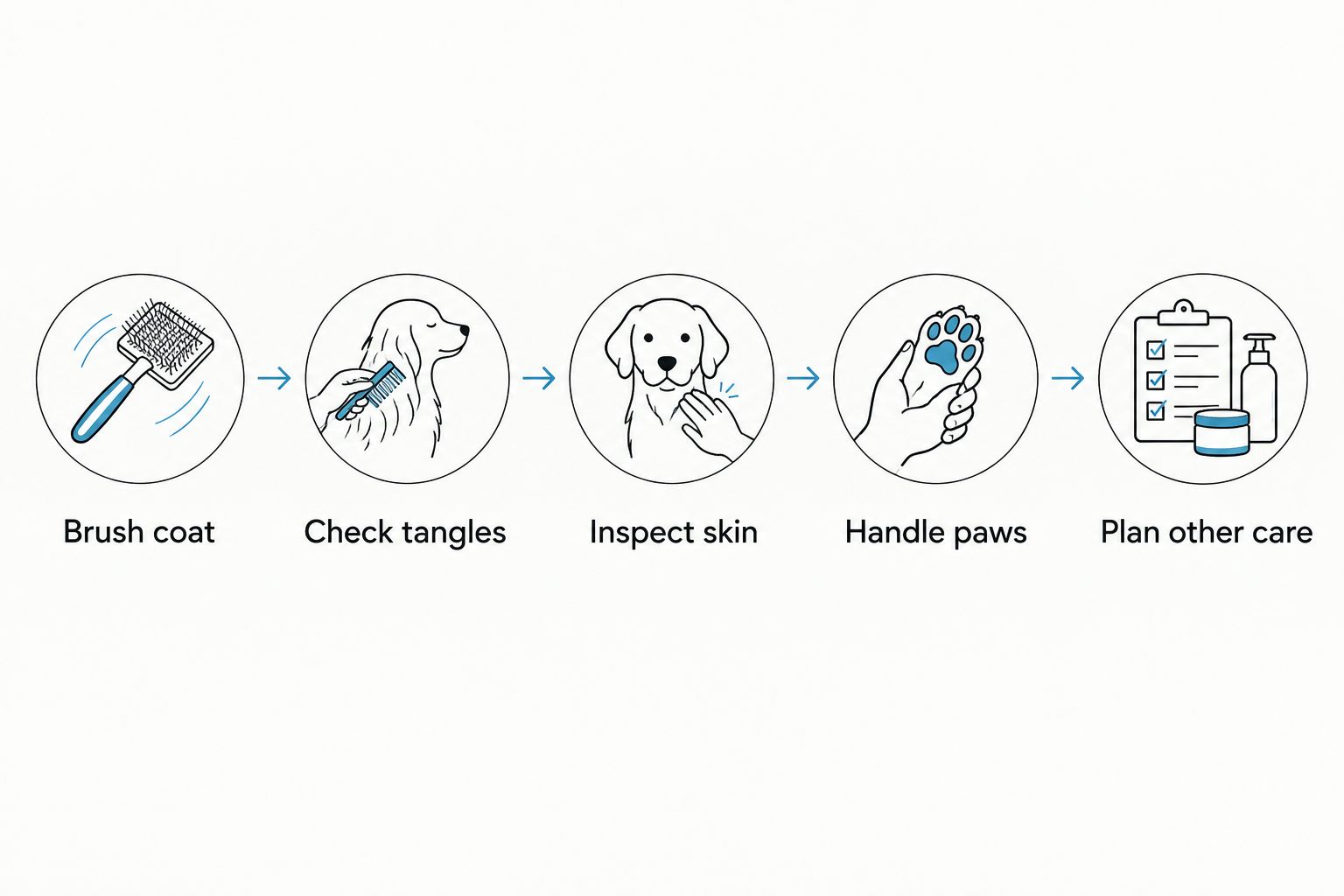
A calm order matters more than finishing every task in one sitting. Use this sequence as a checklist, and stop after any step if your dog has had enough. Your 2026 grooming routine should fit your pet friend, not force them through the whole kit.
- Brush coat: choose the slicker or rubber curry brush that suits the hair, and work gently.
- Check tangles: use a wide-tooth comb on longer coats; stop when it catches rather than pulling.
- Inspect skin: look at the areas you have handled and leave painful or inflamed spots alone.
- Handle paws: check whether your dog is comfortable before bringing out nail clippers.
- Plan other care: make bathing, tooth brushing and ear cleaning separate tasks when that keeps your dog calmer.
This is an order for checking comfort, not a rule that every dog needs every task each time. A playful pup that accepts brushing but dislikes paw handling can finish after the coat check. Build paw handling into another calm session.
How these supplies were ranked
The ranking starts with the tool that solves the most immediate coat task for its intended dog, then covers supplies for other distinct jobs. Coat fit, control, safe use and how easily a task fits into a repeatable routine determine each verdict. A slicker brush ranks first for medium-to-long coats, not for every dog. A rubber curry brush takes that spot for a short, smooth coat.
No single product can brush a coat, trim nails and clean teeth. That is why the comparison separates tasks instead of calling one oversized grooming kit the best choice in 2026.
Which dog grooming supplies should you choose?
Start with a slicker brush if your dog has a medium-to-long coat, or a rubber curry brush if the coat is short and smooth. Add a comb when you need to check longer hair for hidden knots. Nail clippers are next only when you can trim safely; dog shampoo belongs in the kit if you bathe at home.
For teeth, choose a dog toothbrush and dog toothpaste rather than expecting a chew toy to do the same job. Add ear cleaner for routine cleaning when it is appropriate for your dog, and ask a vet about painful or unusual ears. Pet Care Online suits Australian owners gathering pet supplies for these home-care tasks, but your dog's coat and comfort set the shopping list.
FAQ
What are the best dog grooming supplies for home use in 2026?
The best starting supplies are a coat-matched brush, dog nail clippers and dog shampoo if you bathe at home. Choose a slicker brush for a suitable medium-to-long coat or a rubber curry brush for a short, smooth coat; add other tools for the tasks your dog needs.
Is a slicker brush or rubber curry brush better for my dog?
A slicker brush is the better starting choice for many medium-to-long coats, while a rubber curry brush suits short, smooth coats. A rubber curry brush will not work through long-coat tangles.
Do I need a comb if I already have a dog brush?
A wide-tooth comb is useful for checking a longer coat after brushing. If it catches on a knot, stop and inspect the area rather than pulling the comb through.
Can I trim my dog's nails at home?
You can trim your dog's nails at home when your dog tolerates paw handling and you can identify a safe place to cut. If the nail is hard to judge or your dog pulls away, ask a groomer or vet to demonstrate before trimming.
Can I use human shampoo on my dog?
Use shampoo intended for dogs instead of human shampoo for a home bath. Follow the label, keep it out of the eyes and ears, and rinse the coat thoroughly.
Do dental chew toys replace brushing a dog's teeth?
No, a dental chew toy does not replace brushing with a dog toothbrush and dog toothpaste. It is a play item, not a way to diagnose or resolve dental problems.
When should I avoid cleaning my dog's ears at home?
Avoid routine home cleaning when an ear is painful, has discharge or has an unusual smell. Ask a vet to assess the problem instead of trying to treat it with ear cleaner.
One last thing
Before buying another dog grooming tool in 2026, check which task you already avoid. If it is brushing, change the brush to suit the coat. If it is nail trimming or tooth brushing, practise gentle handling first; a new tool cannot make a frightened dog comfortable on its own.