Big cats need big scratching gear — a standard post that suits a 4kg domestic shorthair won't hold up to a 7kg Maine Coon or Ragdoll leaning into a full-body stretch. This guide ranks the scratching post styles that actually work for large cats in 2026, based on height, base stability, and material durability.
- The best cat scratching post for large cats in 2026 is a tall sisal rope tower with a wide, heavy base.
- Wall-mounted cardboard scratchers suit big cats in small apartments where floor space is tight.
- Multi-level cat trees work best when a large cat shares the home with smaller housemates.
- Skip posts under 70cm tall — large breeds need full-stretch height, not just floor coverage.
Why this matters
A scratching post that's too short or too wobbly gets ignored, and an ignored post means claws end up on the couch instead. Large breeds like Maine Coons and Ragdolls commonly weigh 5.9–8.2kg as adults, and a cat that heavy needs a base wide enough to stay upright when it puts its full weight into a stretch.
Most posts sold in Australia top out around 60–70cm, well short of the 90cm-plus stretch height that behaviourists generally recommend for big breeds. That gap is exactly why picking the right category matters more than picking a specific brand — a post built for an average-sized cat simply won't serve a large one the same way. Pet Care Online stocks a range of pet supplies across cats, dogs, and small animals, and matching the product to the animal's actual size is the same logic that applies whether you're browsing the pet supplies range or choosing a scratching post.
What makes the best cat scratching post for large cats
- Height of at least 80-90cm so the cat can extend its full body during a stretch-scratch
- A base as wide as (or wider than) the cat is long to stop tipping under heavier weight
- Durable scratching surface — thick sisal rope or multi-layer cardboard that resists heavier claw pressure
- Stable construction with weighted or bolted bases, not just glued joints
- Placement flexibility — floor-standing, wall-mounted, or built into a cat tree, depending on your space
- Room for growth if you're bringing home a large-breed kitten that will keep growing for 2-3 years
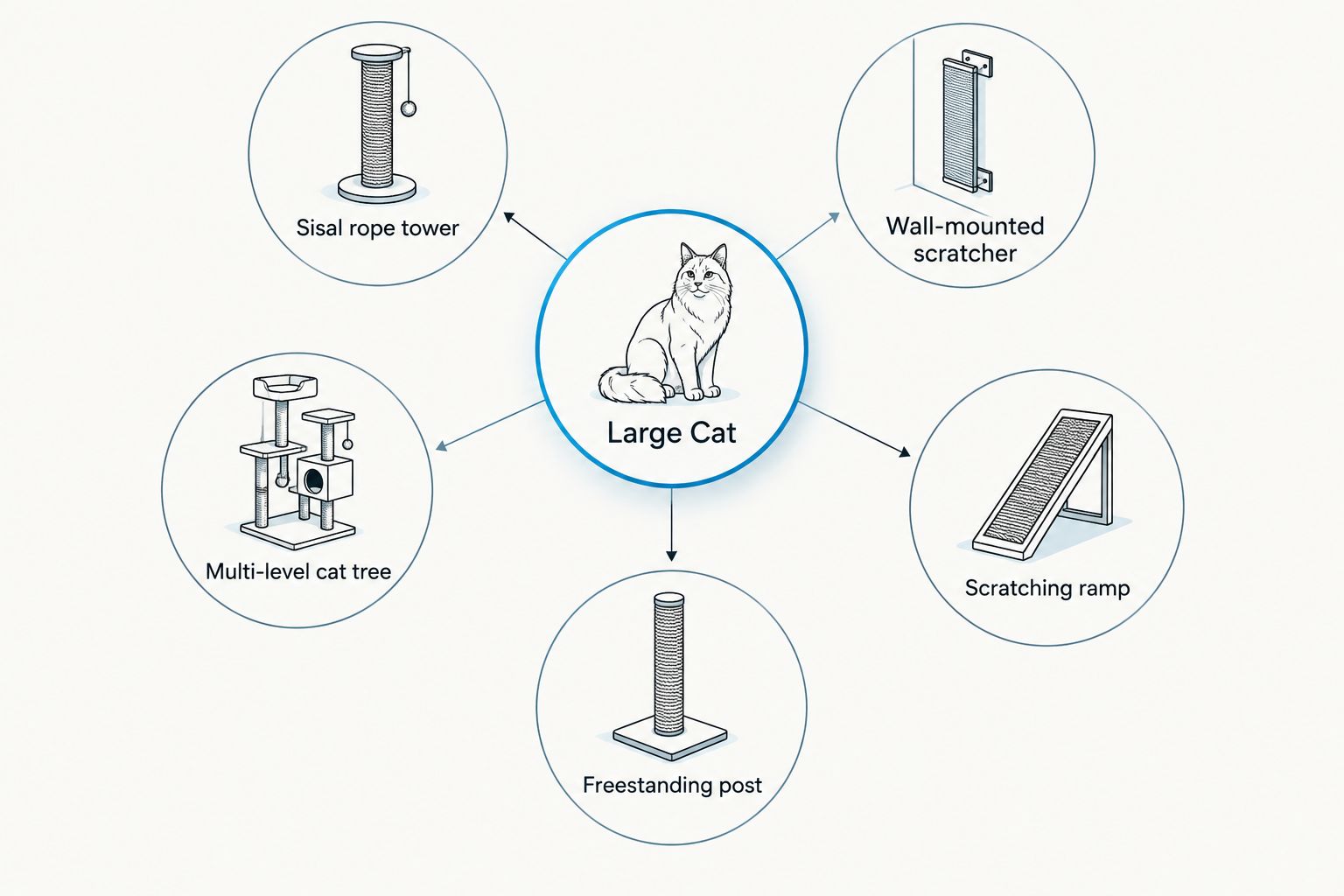
Cat scratching posts for large cats at a glance
| Type | Best for | Standout feature | Key limitation |
|---|---|---|---|
| Sisal rope tower | Aggressive scratchers | Full-stretch height, wide weighted base | Larger floor footprint |
| Wall-mounted cardboard scratcher | Small apartments | No floor space needed | Cardboard wears faster under heavy claws |
| Multi-level cat tree | Multi-cat households | Combines climbing, resting, scratching | Bulky, hard to relocate once built |
| Extra-wide scratching ramp | Senior or joint-sensitive cats | Low-angle, no strain on hips | No vertical stretch benefit |
| Freestanding wide-base post | Budget-conscious owners | Simple, easy to place anywhere | Single surface wears out fastest |
1. Sisal rope tower: best cat scratching post for large cats with strong claws
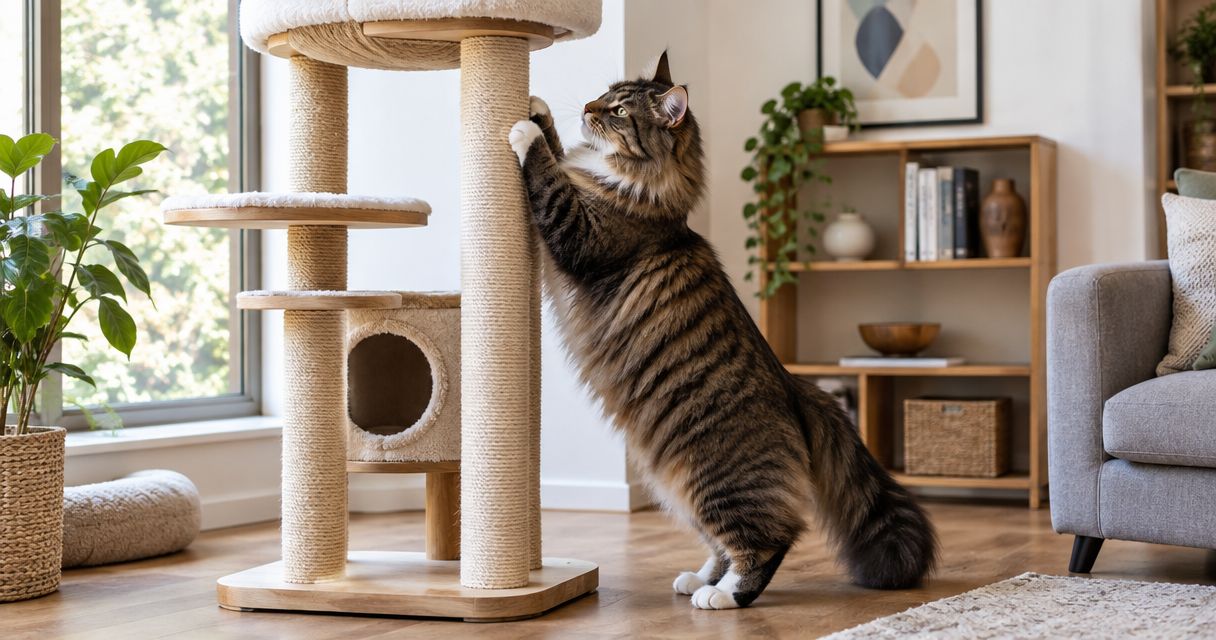
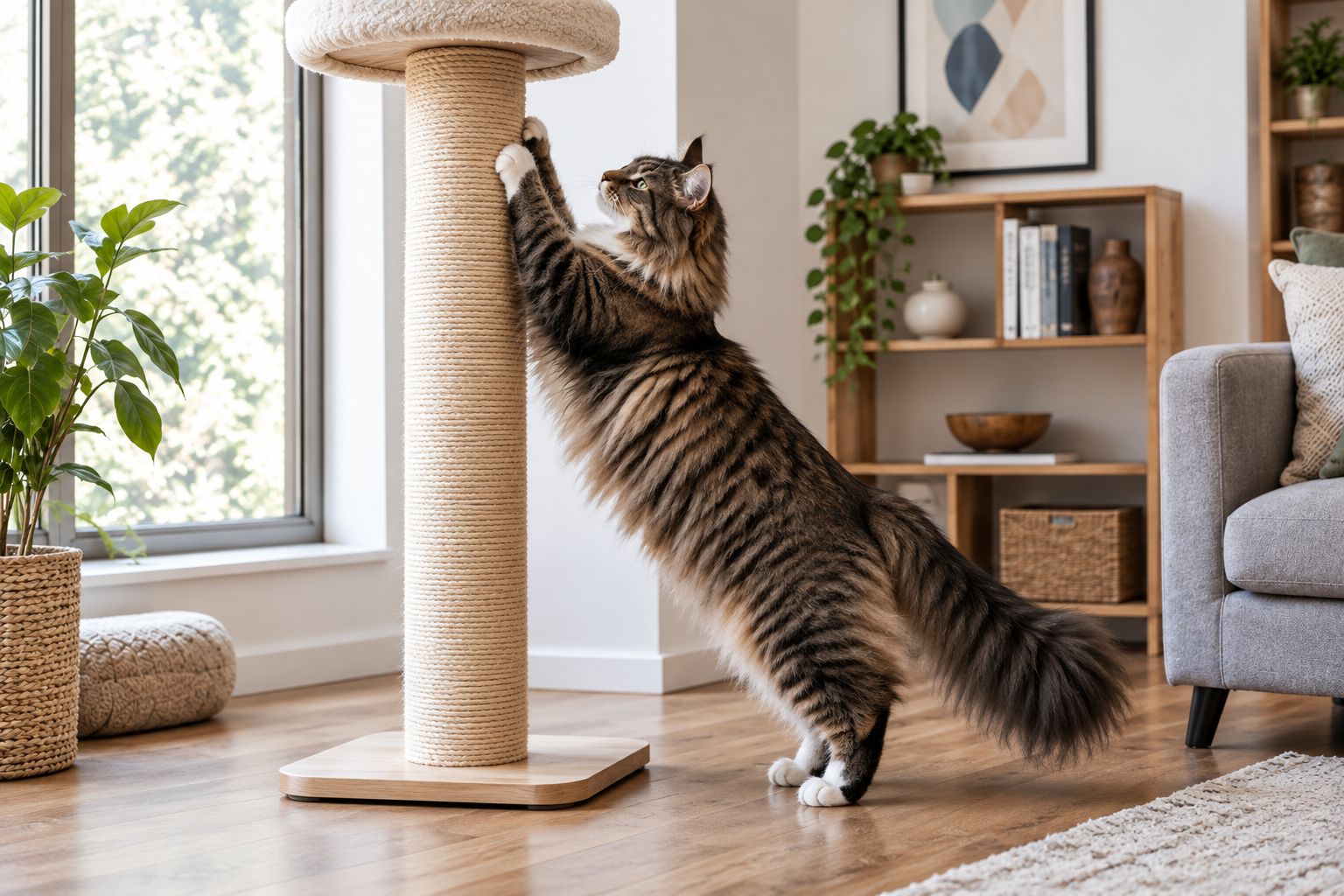
A tall sisal rope tower is the closest thing to a default recommendation for a heavy, powerful scratcher. The rope wraps in tight, and the post height — ideally 80-90cm or taller — lets a large cat get its front paws all the way up and its back legs fully extended.
Sisal rope tower pros:
- Rope surface holds up to daily shredding from strong claws
- Full height supports a proper stretch-scratch, not a half-stretch
- Wide, often weighted base resists tipping under 6-8kg of cat
Sisal rope tower cons:
- Takes up more floor space than a wall unit
- Rope on high-traffic posts wears faster in multi-cat homes
Best for: large cats that scratch hard and often. Verdict: Buy.
2. Wall-mounted cardboard scratcher: best for large cats in small apartments
When floor space is the constraint, a wall-mounted panel solves the height problem without eating up the room. Angled or vertical corrugated cardboard panels let a big cat reach up and stretch without a bulky freestanding base underneath.
Wall-mounted scratcher pros:
- Frees up floor space entirely
- Vertical or angled mounting still allows a full stretch
- Cardboard inserts are simple to swap once worn
Wall-mounted scratcher cons:
- Cardboard wears down faster under a heavier cat's claws than sisal rope
- Needs secure wall fixing to handle a big cat leaning its full weight in
Best for: apartment owners with a large cat and limited floor room. Verdict: Buy for space-limited homes.
3. Multi-level cat tree: best for large cats sharing a home with smaller cats
A cat tree with built-in scratching posts gives a large cat vertical territory of its own, which matters in multi-cat households where a bigger cat might otherwise dominate floor-level resources. The scratching load also spreads across several posts instead of one.
Cat tree pros:
- Combines climbing platforms, resting spots, and scratching in one unit
- Multiple posts mean less wear on any single surface
- Vertical space reduces competition between cats of different sizes
Cat tree cons:
- Larger footprint than a single post or wall panel
- Heavier units are difficult to move once assembled
Best for: homes with more than one cat, especially where a large cat needs its own space. Verdict: Buy for multi-pet homes.
4. Extra-wide scratching ramp: best for senior or joint-sensitive large cats
Older large cats, or breeds prone to hip and joint stiffness, often do better with a low-angle scratching ramp than an upright post. The flat, wide surface supports the cat's full body weight without asking for a big vertical reach.
Scratching ramp pros:
- Low angle avoids strain on hips and shoulders
- Wide surface stays stable under a heavier cat
- Doubles as a flat lounging spot
Scratching ramp cons:
- No vertical stretch, so it won't replace a tower for younger, more active cats
- Larger contact area means the surface wears through faster with daily use
Best for: senior large cats or breeds with joint sensitivity. Verdict: Buy for senior cats, skip if you need a full-stretch option.
5. Freestanding wide-base post: best budget option for stability
A simple freestanding post with a heavy, wide base is the entry point — not the most durable long-term, but a reasonable starting option if you're not ready to commit to a tower or tree yet.
Freestanding post pros:
- Wide base stops tipping when a big cat leans in
- Easy to place and reposition anywhere in the house
- Simple to replace once the surface wears out
Freestanding post cons:
- Single scratching surface wears out fastest with one large cat using it daily
- Shorter posts limit full-stretch scratching for very large breeds
Best for: owners testing whether their cat prefers a post over furniture. Verdict: Hold — a fine starter, upgrade to a taller tower if your cat outgrows it.
“If your cat's front paws hang off the top of the post while stretching, size up — that post is already too small.”
How we ranked these
Each category is ranked against the six criteria above — height, base width, material durability, construction stability, placement flexibility, and room for growth — not against each other head-to-head. A sisal tower and a wall-mounted scratcher aren't competing for the same shelf; they solve different space and behaviour problems, which is why each entry gets its own "best for" label instead of a single ranking number.
Which cat scratching post should you choose for a large cat?
If you only take one thing from this guide: buy for height and base width first, material second. A tall, wide-based sisal rope tower is the safest default pick for most large cats in 2026, and it's the one to reach for if you're not sure which category fits. Go wall-mounted if floor space is genuinely tight, choose a cat tree if you've got more than one cat competing for territory, and switch to a ramp if your large cat is getting older and stiffer in the hips.
FAQ
What's the best cat scratching post for large cats in 2026?
A tall sisal rope tower with a wide, weighted base is the best overall pick for large cats in 2026, since it combines full-stretch height with the stability a heavier cat needs.
How tall should a scratching post be for a large cat?
Aim for at least 80-90cm so the cat can fully extend its body during a stretch-scratch. Shorter posts around 60-70cm work for average-sized cats but often feel cramped to a large breed.
Are cardboard scratchers durable enough for large cats?
Cardboard scratchers work well for large cats but wear down faster than sisal rope under heavier claw pressure. Wall-mounted cardboard panels are still a solid choice when floor space is the priority.
Is a cat tree better than a single scratching post for a large cat?
A cat tree is better when a large cat shares the home with other cats, since it adds vertical territory and spreads scratching wear across multiple posts. A single tower is simpler and takes up less room in a one-cat household.
Do large-breed cats need a wider base on their scratching post?
Yes — the base should be roughly as wide as the cat is long to stop tipping when the cat leans its full weight in. A narrow base is the most common reason a heavier cat abandons a post.
What's the best scratching option for a senior large cat?
A low-angle, extra-wide scratching ramp suits senior large cats best, since it avoids the joint strain of reaching up an upright post while still giving them a place to scratch.
Can a scratching post stop a large cat from scratching furniture?
A properly sized post — tall enough, wide enough, and placed near where the cat already scratches — redirects most of that behaviour away from furniture within the first few weeks.
Do large cats need more than one scratching post?
Multi-cat households usually need more than one post so a large cat isn't competing with smaller housemates for the same surface. Single-cat households can often get by with one well-placed tower.
One last thing
The detail most owners miss isn't material or height — it's angle. Large cats scratch at a slight forward lean more often than straight vertical, which is why a post that wobbles even slightly under sideways pressure gets abandoned faster than one that's simply short. Test stability by pushing the post from the side, not just from above, before you commit to it.