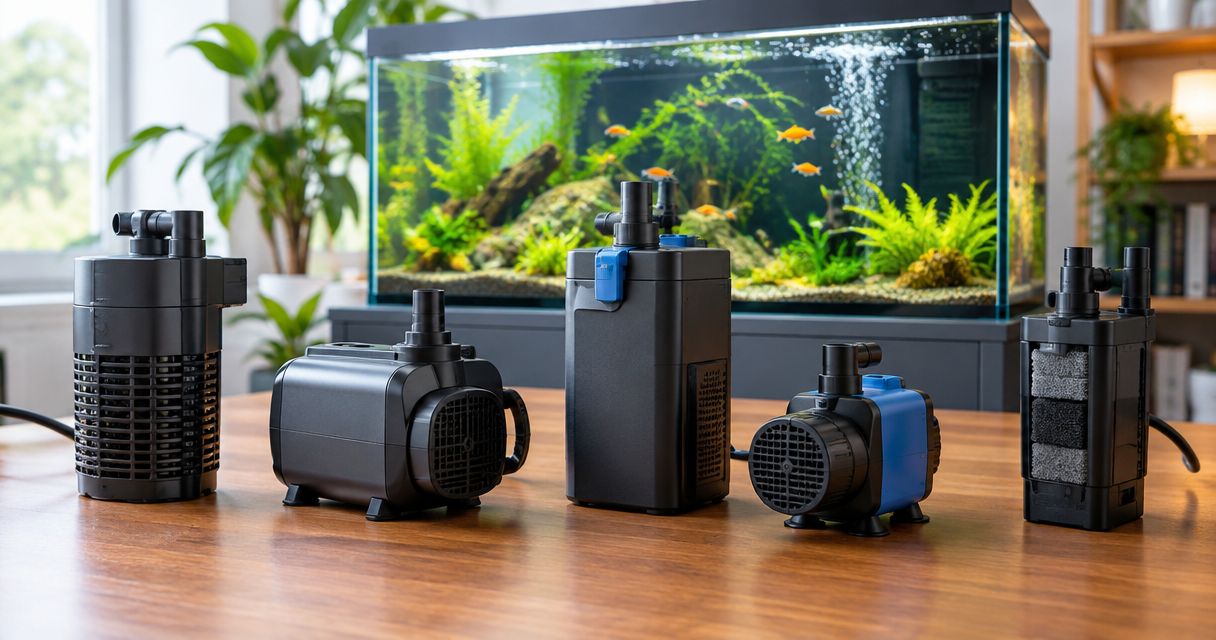
Fish aquarium filter pumps come in five main shapes — canister, hang-on-back, internal, sponge and sump — and the right pick for your 2026 tank depends on volume, bioload and how often you're willing to rinse media, not the name on the box.
- Canister filters are the best fish aquarium filter pumps for tanks over roughly 200L thanks to large media capacity.
- Hang-on-back (HOB) filters suit first-time keepers running 20-100L setups in 2026.
- Sponge filters are the safest choice for shrimp, snails and fry because they run on gentle flow.
- Match filter turnover to 4-6 times your tank volume per hour for stable water quality.
- Sump filters belong in reef tanks and large custom builds, not beginner setups.
Why this matters
A mismatched filter pump is the single biggest reason new tanks cloud up, smell, or lose fish in the first month. Too little flow and waste builds up faster than bacteria can break it down; too much flow and bettas, shrimp and fry get pinned against the glass.
Pet Care Online stocks aquarium gear across all five filter categories, but the right type for your tank comes down to a handful of specs you can check before you buy, not the brand on the label.
Best overall for most tanks: canister filters. Best for beginners and small-to-medium setups: hang-on-back (HOB) filters. Best for breeding tanks and shrimp colonies: sponge filters.
What makes the best aquarium filter pump
- Flow rate matched to tank volume — the pump should turn over your total water volume 4-6 times an hour.
- Media capacity — room for mechanical, biological and chemical stages, not just one sponge.
- Noise level — a filter you can hear from the next room gets switched off, which defeats the purpose.
- Maintenance frequency — how often you need to open it up and rinse media in tank water.
- Output style — spray bar, waterfall or gentle bubble, depending on which fish are swimming in front of it.
- Flow sensitivity of your stock — bettas, shrimp and fry need low-flow options; goldfish and cichlids tolerate more.
At a glance: fish aquarium filter pumps compared
| Filter type | Best for | Standout feature | Key limitation |
|---|---|---|---|
| Canister filter | Large tanks, heavy bioload | Highest media capacity, fully sealed | Bulkier plumbing, harder for first-timers |
| Hang-on-back (HOB) filter | Beginners, 20-100L tanks | Easy to install and service | Limited media volume for big tanks |
| Internal/submersible filter | Nano tanks, quarantine tubs | Sits inside the tank, no external hoses | Takes up display space |
| Sponge filter | Breeding tanks, shrimp, fry | Gentle flow, no fry intake risk | Weak mechanical filtration alone |
| Sump/wet-dry filter | Reef tanks, large custom builds | Huge water volume and media room | Needs a stand cavity and plumbing skill |
1. Canister filter: best fish aquarium filter pump for large tanks and heavy bioload
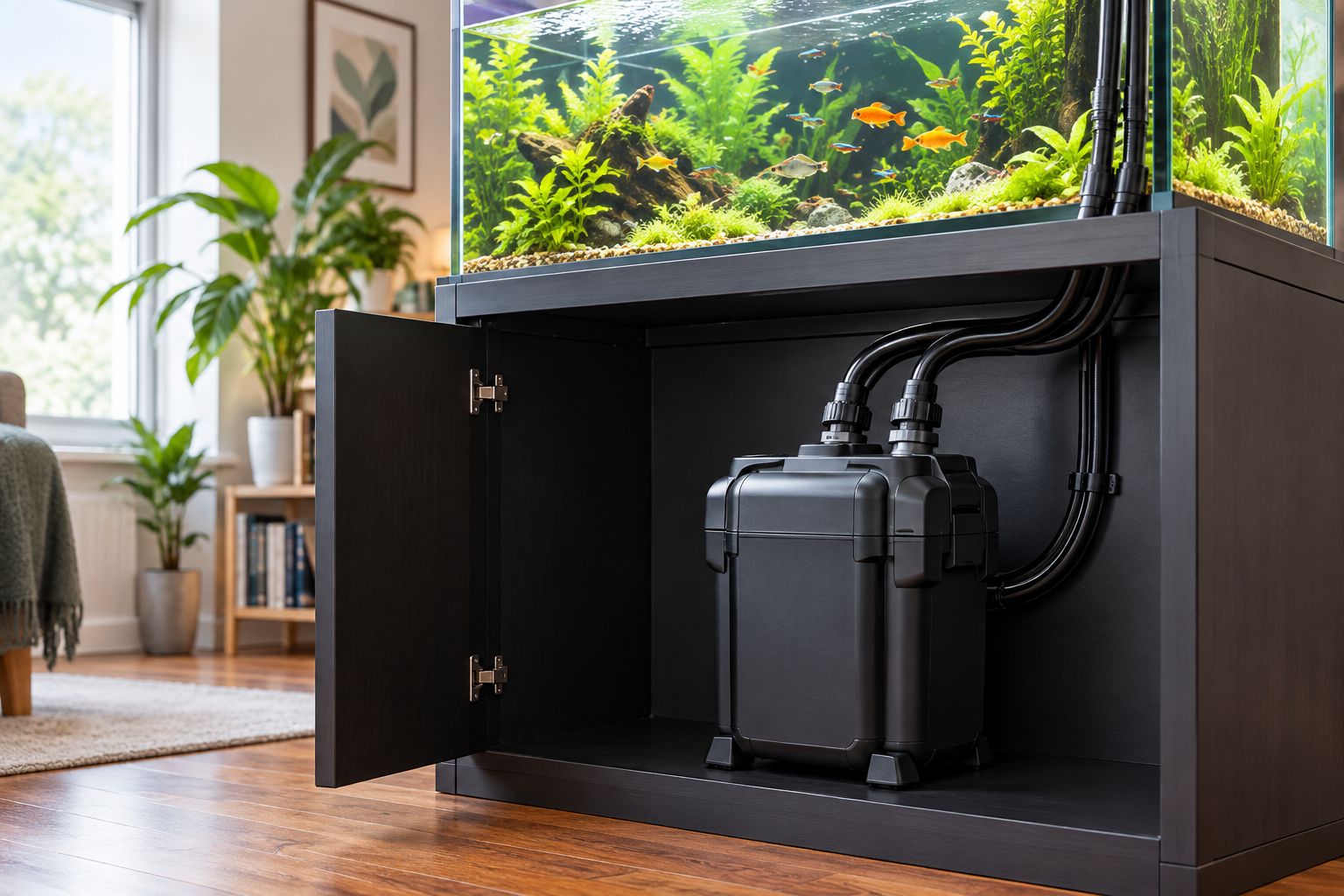
A canister filter sits outside the tank, usually under the stand, and pulls water through several stacked media trays before returning it via a spray bar or nozzle. The sealed design means you get mechanical, biological and chemical stages in one unit, which matters once a tank passes roughly 200L.
Canister filter pros:
- Largest media capacity of any filter pump type on this list
- Runs quietly once primed, usually tucked out of sight
- Handles heavy bioloads from cichlids, goldfish and planted tanks
Canister filter cons:
- Priming and hose setup takes longer than a hang-on unit
- Media changes mean lifting a full canister, which gets heavy
Best for: established tanks over 200L with a heavier fish or plant load. Verdict: Buy if your tank has outgrown a hang-on-back filter.
2. Hang-on-back filter: best fish aquarium filter pump for beginners
A hang-on-back (HOB) unit clips onto the rear rim of the tank, drawing water up through an intake tube and dropping it back over a media basket. It's the filter most new keepers start with because setup takes minutes and media swaps don't involve any plumbing.
HOB filter pros:
- Fast setup with no hose runs or priming
- Media cartridges are cheap and simple to swap
- Flow rate is easy to see and adjust at the intake
HOB filter cons:
- Media basket is smaller than a canister, so it needs more frequent rinsing on stocked tanks
- The waterfall return can be loud on some models
Best for: first tanks between 20L and 100L. Verdict: Buy if this is your first aquarium.
3. Internal/submersible filter: best fish aquarium filter pump for nano tanks and quarantine setups
An internal filter sits fully underwater, held to the glass with a suction cup, and pushes filtered water back out through a small spout. It's the go-to option for tanks under 40L or for a spare quarantine tub you only fill occasionally.
Internal filter pros:
- No external hoses or hardware to leak
- Cheap enough to keep a spare for quarantine or hospital tanks
- Easy to move between tanks as needed
Internal filter cons:
- Takes up visible space inside a display tank
- Media volume is the smallest on this list
Best for: nano tanks, quarantine tubs and backup filtration. Verdict: Hold unless your tank is under 40L or you need a spare unit.
Match filter flow to tank size before you buy
Check the pump's rated flow in litres per hour against your tank's total volume. A 100L tank calling for 4-6x turnover needs a pump rated somewhere between 400 and 600 litres per hour once you allow for hose loss and media resistance.
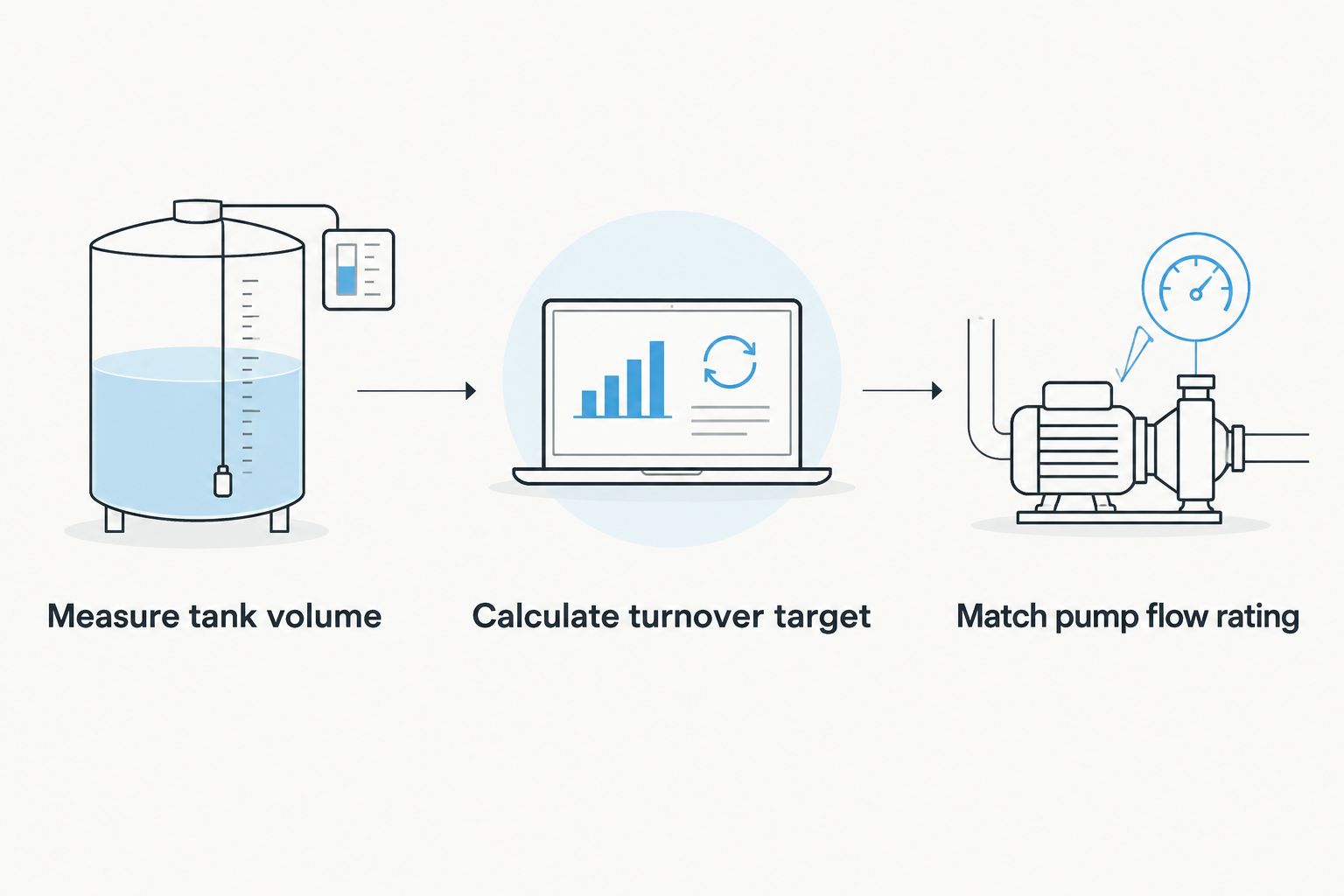
If the crank on the flow dial only gets you to 2x turnover on a stocked tank, the pump is undersized no matter what the box promises.
4. Sponge filter: best fish aquarium filter pump for breeding tanks and shrimp
A sponge filter runs on an air pump pushing bubbles up through a foam sleeve, drawing water through the sponge for gentle mechanical and biological filtration. There's no intake strong enough to pull in fry or baby shrimp, which is why breeders lean on them.
Sponge filter pros:
- Zero risk of sucking up fry, shrimp or snails
- Very low cost to run and simple to clean in tank water
- Doubles as extra biological filtration alongside a canister or HOB
Sponge filter cons:
- Weak on mechanical filtration alone in a heavily stocked tank
- Needs a separate air pump, which adds a bit of noise
Best for: breeding tanks, shrimp colonies and fry-rearing tubs. Verdict: Buy for any tank housing shrimp, snails or fry.
5. Sump/wet-dry filter: best fish aquarium filter pump for reef tanks and large custom builds
A sump sits in the cabinet below the display tank, with water overflowing down into a separate container that houses media, a protein skimmer and a return pump. It gives you the largest total water volume and media capacity of any option here, which is why reef keepers rely on them.
Sump filter pros:
- Massive media and water volume compared to any hang-on or canister unit
- Hides equipment like heaters and skimmers out of the display
- Easy to dose and adjust without disturbing the main tank
Sump filter cons:
- Needs drilling or an overflow box, plus stand space and plumbing know-how
- Overkill and expensive complexity for a first tank
Best for: reef tanks and large custom freshwater or saltwater builds. Verdict: Wait unless you're running a tank built specifically around one.
“If your filter can't turn over the whole tank at least four times an hour, no amount of extra decor fixes the water quality.”
How this ranking was built
Each type is scored against the same six criteria — turnover matching, media capacity, noise, maintenance load, output style and flow sensitivity for stock — rather than picking a single winner and forcing every tank into it. That's why the list reads as five different "best for" slots instead of one leaderboard.
Which fish aquarium filter pump should you choose?
Start with tank size: under 40L, an internal filter earns its spot; 20-100L, a hang-on-back filter is still the easiest entry point in 2026; over 200L or heavily stocked, a canister filter carries the bioload without constant cleaning. Add a sponge filter alongside any of those the moment shrimp, snails or fry move in, and only look at a sump once you're planning a tank built around one from the start.
FAQ
What's the best fish aquarium filter pump for a beginner tank?
A hang-on-back (HOB) filter is the best starting point for tanks between 20L and 100L in 2026 because setup takes minutes and media cartridges swap out with no plumbing involved.
Is a canister filter better than a hang-on-back filter?
A canister filter holds more media and handles heavier bioloads, which makes it the better pick once a tank passes roughly 200L. For smaller, lighter-stocked tanks a hang-on-back filter is simpler to run.
How do I size a filter pump to my tank?
Match the pump's rated flow in litres per hour to 4-6 times your tank's total volume. A 100L tank needs a pump rated close to 400-600 litres per hour once hose and media resistance are factored in.
Do shrimp and fry need a special filter?
Yes — a sponge filter is the safest fish aquarium filter pump for shrimp, snails and fry because the intake is too gentle to pull small animals in.
How often should I clean an aquarium filter pump?
Rinse mechanical media in tank water every 2-4 weeks and avoid tap water, which kills the beneficial bacteria living in the sponge or cartridge.
Can I run two filter types on one tank?
Yes, pairing a sponge filter with a canister or HOB filter is common practice, giving extra biological filtration without added intake risk for smaller tank mates.
Are internal filters good enough for a main tank?
Internal filters work well under 40L or as a quarantine tub filter, but they carry the smallest media volume on this list so they're not the first choice for a heavily stocked display tank.
What's the downside of a sump filter?
A sump needs drilling or an overflow box plus stand space and plumbing setup, which makes it unnecessary complexity for a first tank even though it offers the largest water and media volume.
One last thing
The turnover number on the box assumes clean media and no hose bends — real-world flow drops 10-20% once media clogs slightly, so buying a pump rated right at the minimum 4x turnover leaves no margin between water changes.