Best overall: wrought iron bird cage stand. Best for small spaces and renters: rolling bird cage stand. Best budget option: wooden bird cage stand. If your cage wobbles every time your bird hops from perch to perch, the stand underneath is the problem, not the cage.
- A wrought iron bird cage stand wins overall in 2026 for stability with large or heavy cages.
- Rolling bird cage stands suit renters and small Australian apartments where the cage needs to move between rooms.
- Wooden bird cage stands cost less and blend into home decor but carry lighter cages only.
- Adjustable-height stands matter most in multi-person or multi-pet households.
- Check the base width against your cage footprint before buying any bird cage stand.
Why this matters
A cage sitting on the wrong stand is a daily hazard, not just a decor mismatch. Too narrow a base and an active parrot can tip the whole thing during a wing-flap; too tall and cleaning the tray becomes a two-person job. Pet Care Online stocks cages and enclosures for exactly this reason — the stand you choose has to match the cage you already own or plan to buy, not the other way around.
The same logic applies across outdoor housing. Anyone setting up an aviary alongside backyard poultry runs will recognise the pattern from the small backyard chicken coops guide — base stability and ease of cleaning decide whether the setup lasts through an Australian summer or gets replaced within a year.
What makes the best bird cage stand
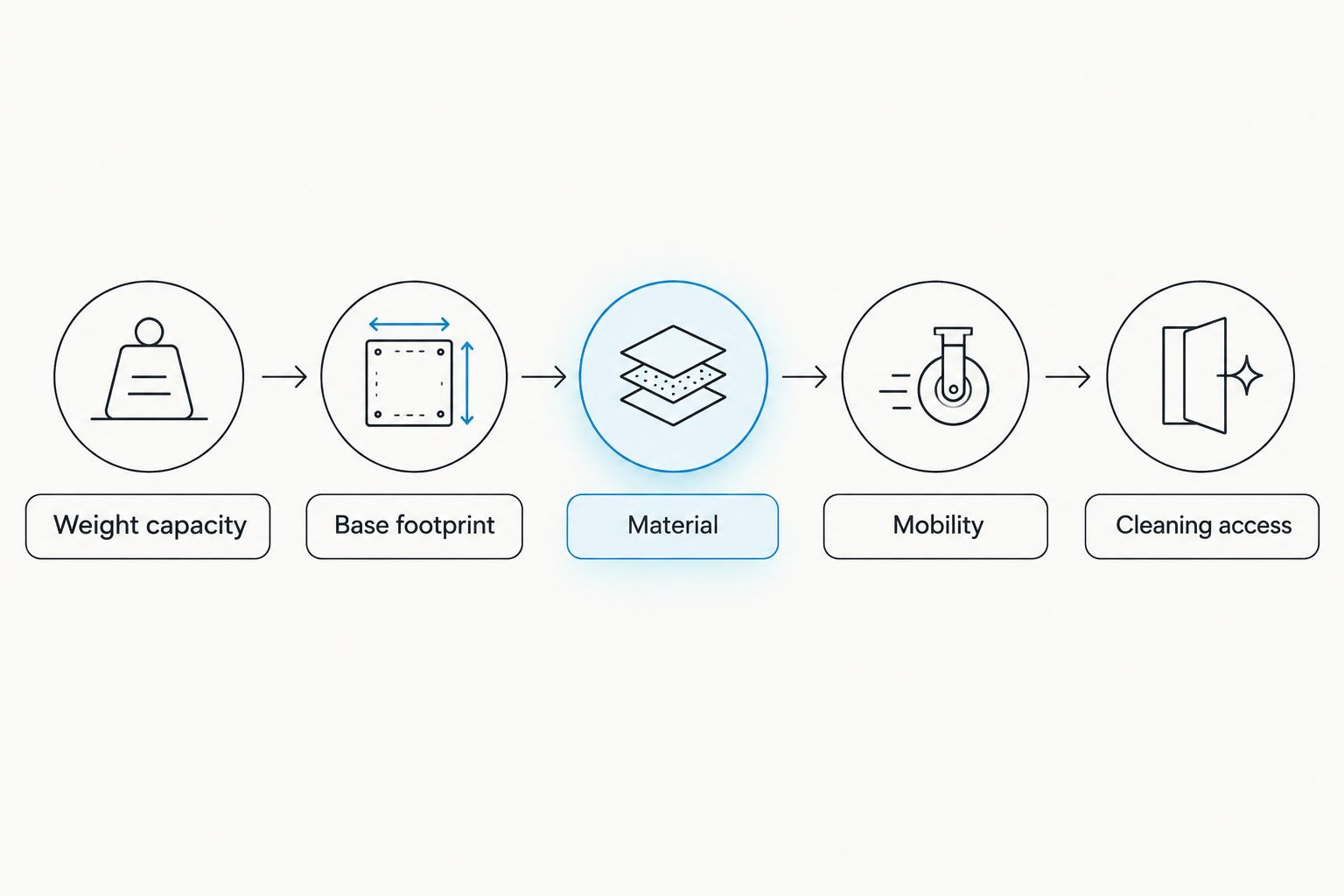
- Weight capacity — the stand has to hold the cage, the bird, food, water and toys with margin to spare
- Base footprint — a base wider than the cage prevents tipping when a bird lands hard on a swing
- Material durability — powder-coated iron resists rust better than untreated wood in humid coastal climates
- Mobility — locking castor wheels matter if the cage moves rooms for daylight or company
- Cleaning access — enough clearance underneath for a tray or mat to slide out without lifting the cage
- Height fit — the stand should put the cage at a height where the bird can see the room, not the ceiling
Bird cage stands at a glance
| Stand type | Best for | Standout feature | Key limitation |
|---|---|---|---|
| Wrought iron stand | Large or heavy cages | High weight capacity, rust-resistant coating | Heaviest to relocate |
| Rolling stand | Moving between rooms | Locking castor wheels | Wheels need a flat, hard floor |
| Wooden stand | Matching home decor | Lightweight, blends with furniture | Lower weight capacity, humidity-sensitive |
| Adjustable-height stand | Multi-person households | Height adjusts to seated or standing eye level | More moving parts to maintain |
| Foldable/portable stand | Travel and vet visits | Packs flat, quick setup | Not built for permanent daily use |
1. Wrought iron bird cage stand: best overall for heavy or large cages
A wrought iron stand is built from powder-coated metal tubing with a wide four-point base, made to carry cages that hold macaws, cockatoos or multiple smaller birds. The weight sits low and the base spreads wide, so a bird slamming into the bars doesn't rock the whole unit.
Wrought iron stand pros:
- Handles the heaviest cages without flexing
- Powder coating resists rust in humid climates
- Wide base resists tipping
- Usually includes a bottom shelf for seed trays or supplies
Wrought iron stand cons:
- Heaviest option to move once assembled
- Costs more than a basic wooden frame
- Metal can feel cold to the touch in winter rooms
Best for: owners with large parrots or multiple cages on one stand. Verdict: Buy — the safest default for 2026 if your cage weighs more than a few kilograms fully loaded.
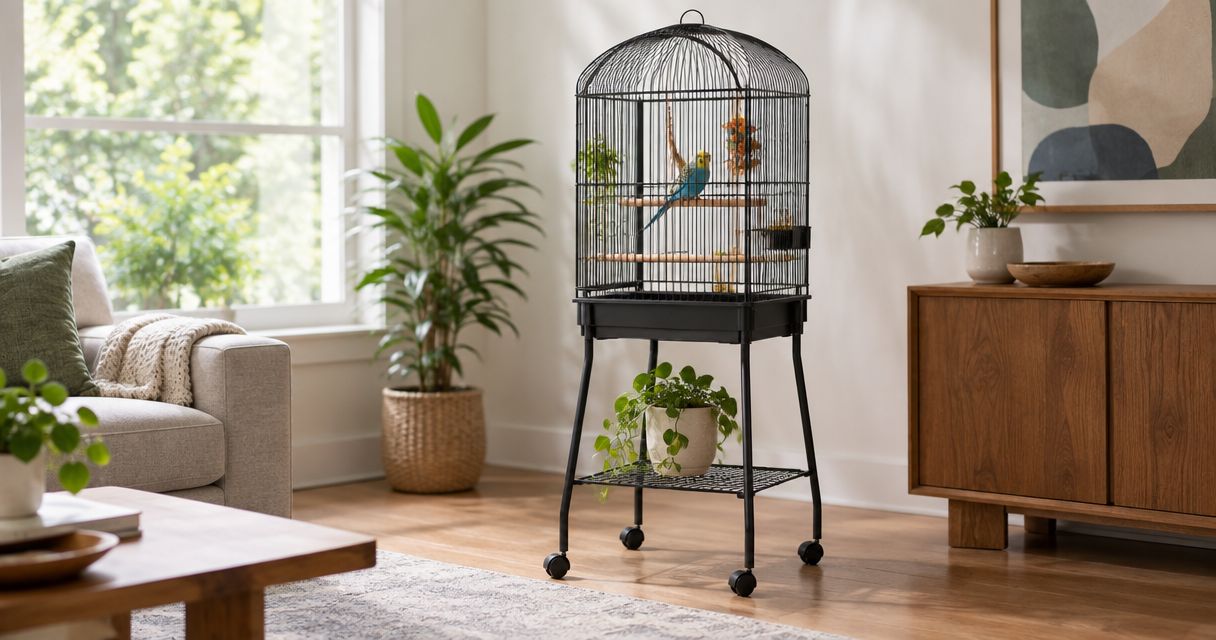
2. Rolling bird cage stand: best for apartments and shared living
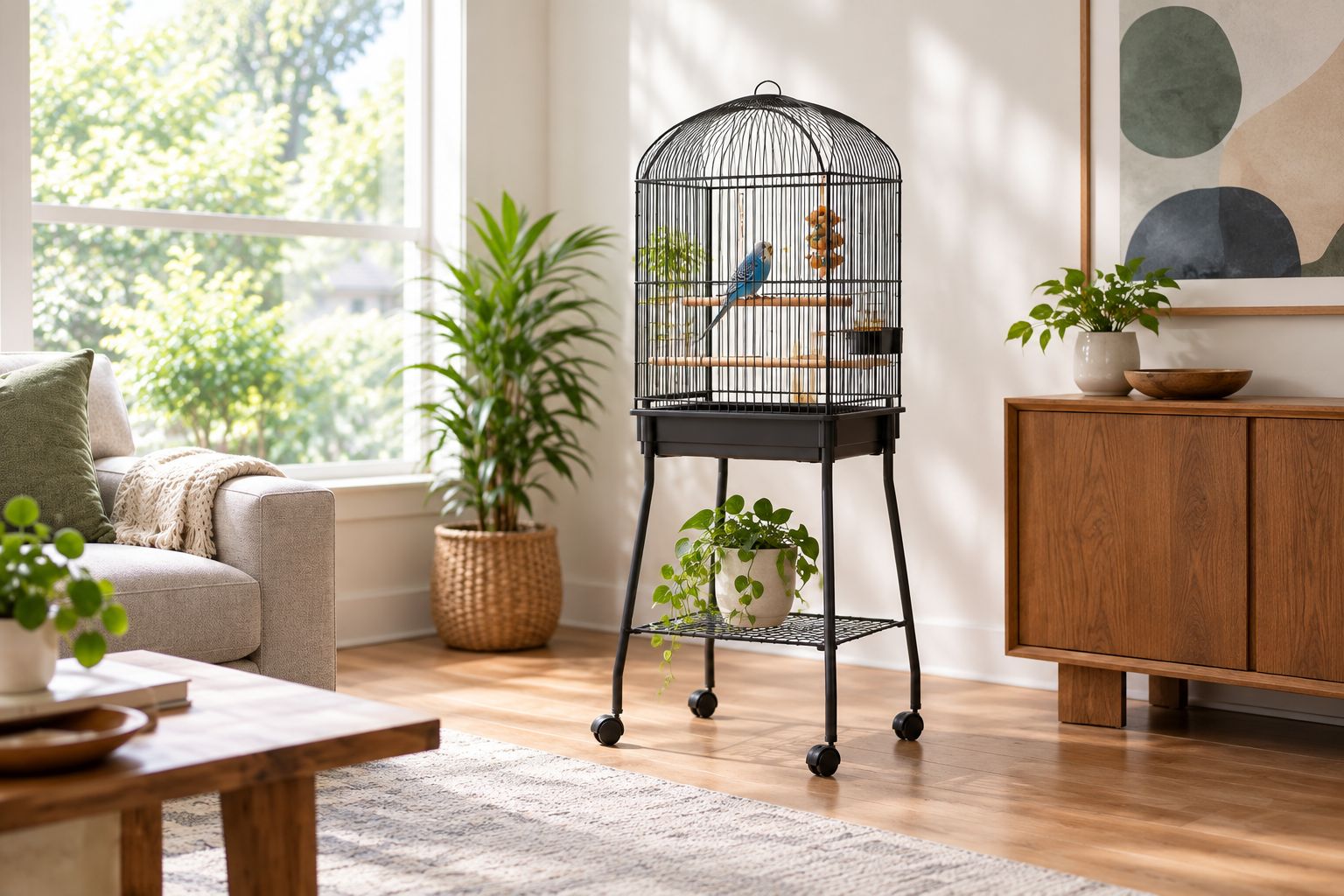
A rolling stand puts the same iron or steel frame on locking castor wheels, letting the whole cage move from a sunny window in the morning to a quieter corner at night. This matters more in rental properties where the ideal spot for natural light isn't always where the household spends the evening.
Rolling stand pros:
- Repositions the cage without lifting it
- Locking wheels hold it steady once parked
- Good for renters who rearrange rooms often
Rolling stand cons:
- Wheels perform poorly on carpet
- Adds another moving part that can wear over time
- Slightly less stable than a fixed-base equivalent
Best for: apartment dwellers and anyone who moves the cage daily for sunlight or company. Verdict: Buy — if your floors are tile, timber or vinyl rather than deep-pile carpet.
3. Wooden bird cage stand: best budget option for lighter cages
A timber stand suits smaller cages holding budgies, canaries or finches, where the total weight stays under what a lighter frame can comfortably support. It reads as furniture rather than equipment, which matters in a living room where the cage stays visible all day.
Wooden stand pros:
- Lower cost than metal alternatives
- Blends into home decor better than iron
- Lightweight enough for one person to reposition
Wooden stand cons:
- Lower weight capacity than iron or steel
- Can warp or swell in humid or coastal air over 2026's wet months
- Less resistant to scratching from claws or beaks
Best for: small cage setups with budgies, finches or a single canary. Verdict: Hold — fine for light cages, skip it for anything holding a mid-sized or large parrot.
4. Adjustable-height bird cage stand: best for multi-person households
This stand type uses a telescoping or notched pole so the cage height changes to suit whoever is interacting with the bird — lower for children, higher for adults standing at eye level with a tall cage. It's the practical pick when more than one person in the house handles daily care.
Adjustable-height stand pros:
- Height changes without re-buying furniture
- Suits households with kids or mixed mobility needs
- Keeps the bird at eye level rather than looking up or down all day
Adjustable-height stand cons:
- More joints and locking mechanisms that can loosen with use
- Typically pricier than a fixed-height frame
- Needs periodic checking that the height lock hasn't slipped
Best for: families where kids and adults both handle feeding and cage cleaning. Verdict: Buy — worth the extra mechanism if height needs actually change day to day.
5. Foldable/portable bird cage stand: best for travel and vet visits
A foldable stand collapses flat for storage or transport, built for temporary setups rather than a permanent spot in the lounge room. It's the stand you keep in the car boot for vet trips, boarding drop-offs or weekends away.
Foldable stand pros:
- Packs flat for storage or transport
- Quick to set up and pack down
- Useful backup when the main stand is being cleaned or repaired
Foldable stand cons:
- Not rated for full-time daily use
- Lower weight capacity than a permanent stand
- Less stable on uneven ground outdoors
Best for: travel, vet visits, and as a spare while the primary stand is out of action. Verdict: Wait — buy one only once you already own a permanent stand for daily use.
“If the stand wobbles when you tap the top rail, it's too light for the cage sitting on it.”
How we ranked these bird cage stands
Each stand type is judged against the same six criteria: weight capacity, base footprint, material durability, mobility, cleaning access and height fit. The wrought iron stand tops the list because it scores well across all six; the others earn their spot by winning decisively on one criterion that suits a specific household — apartment living, budget, shared care, or travel.
Which bird cage stand should you choose?
For most Australian households running a mid-to-large cage, the wrought iron bird cage stand is the safe 2026 default — it carries the most weight and resists tipping better than any other type here. Renters and apartment owners who reposition cages often should look at a rolling stand instead, provided the floor isn't deep-pile carpet. Small cages with budgies or finches don't need the extra capacity — a wooden stand does the job at a lower cost. Skip the foldable option unless you already have a permanent stand and just need a backup for travel days.
FAQ
What is the best bird cage stand in 2026?
A wrought iron bird cage stand is the best overall pick in 2026 for weight capacity and stability. Renters should consider a rolling stand instead for easier repositioning.
How tall should a bird cage stand be?
The stand should put the cage at a height where the bird can see the room at roughly eye level for a seated or standing adult. An adjustable-height stand solves this when household members have different heights.
Do bird cage stands need wheels?
Wheels aren't required, but locking castor wheels help if the cage moves between rooms for sunlight or company. Skip wheeled stands on carpeted floors, where castors perform poorly.
Is a wooden or metal bird cage stand better?
Metal, particularly powder-coated wrought iron, carries more weight and resists humidity better than timber. Wooden stands suit smaller, lighter cages and cost less.
How much weight can a bird cage stand hold?
Weight capacity varies by material and construction, with wrought iron frames rated highest and wooden frames rated lowest. Always match the stand's rated capacity to the cage plus bird, food and accessories, with margin to spare.
Can I put a bird cage stand outside?
Some wrought iron stands tolerate outdoor conditions better than wooden ones, but most bird cage stands are designed for indoor use. Check for a powder-coated or weather-resistant finish before placing any stand outdoors.
How do I stop a bird cage stand from tipping over?
Choose a base footprint wider than the cage itself and keep the stand on a flat, level floor. A stand that wobbles when you tap the top rail is too light for the cage sitting on it.
Are adjustable bird cage stands worth it?
Adjustable-height stands are worth the extra cost in households where more than one person, including children, handles daily bird care. In a single-adult household, a fixed-height stand is usually simpler and has fewer parts to maintain.
One last thing
Most tipping incidents happen not because the stand is weak, but because the base is narrower than the cage sitting on top of it — measure your cage's footprint before you measure height, and add a few centimetres of base clearance on every side as your minimum in 2026.